
OK, just to be clear, I’m not going to blog every day, but over the last few days, for a variety of reasons, I’ve been thinking about 2 Corinthians 5:1-10, trying to puzzle it out in the company of some commentators. I was thinking about it with the frailty of my nearly 100 year-old mother in mind, not to mention my own ageing body, and I think I managed to come to what is a coherent view of why what Paul writes here feels so very different to what he writes in 1 Corinthians 15. First of all, here’s the text of 2 Corinthians 5.
2 Corinthians 5:1-10 (NIV)
For we know that if the earthly tent we live in is destroyed, we have a building from God, an eternal house in heaven, not built by human hands. 2 Meanwhile we groan, longing to be clothed instead with our heavenly dwelling, 3 because when we are clothed, we will not be found naked. 4 For while we are in this tent, we groan and are burdened, because we do not wish to be unclothed but to be clothed instead with our heavenly dwelling, so that what is mortal may be swallowed up by life. 5 Now the one who has fashioned us for this very purpose is God, who has given us the Spirit as a deposit, guaranteeing what is to come.
6 Therefore we are always confident and know that as long as we are at home in the body we are away from the Lord. 7 For we live by faith, not by sight. 8 We are confident, I say, and would prefer to be away from the body and at home with the Lord. 9 So we make it our goal to please him, whether we are at home in the body or away from it. 10 For we must all appear before the judgment seat of Christ, so that each of us may receive what is due to us for the things done while in the body, whether good or bad.
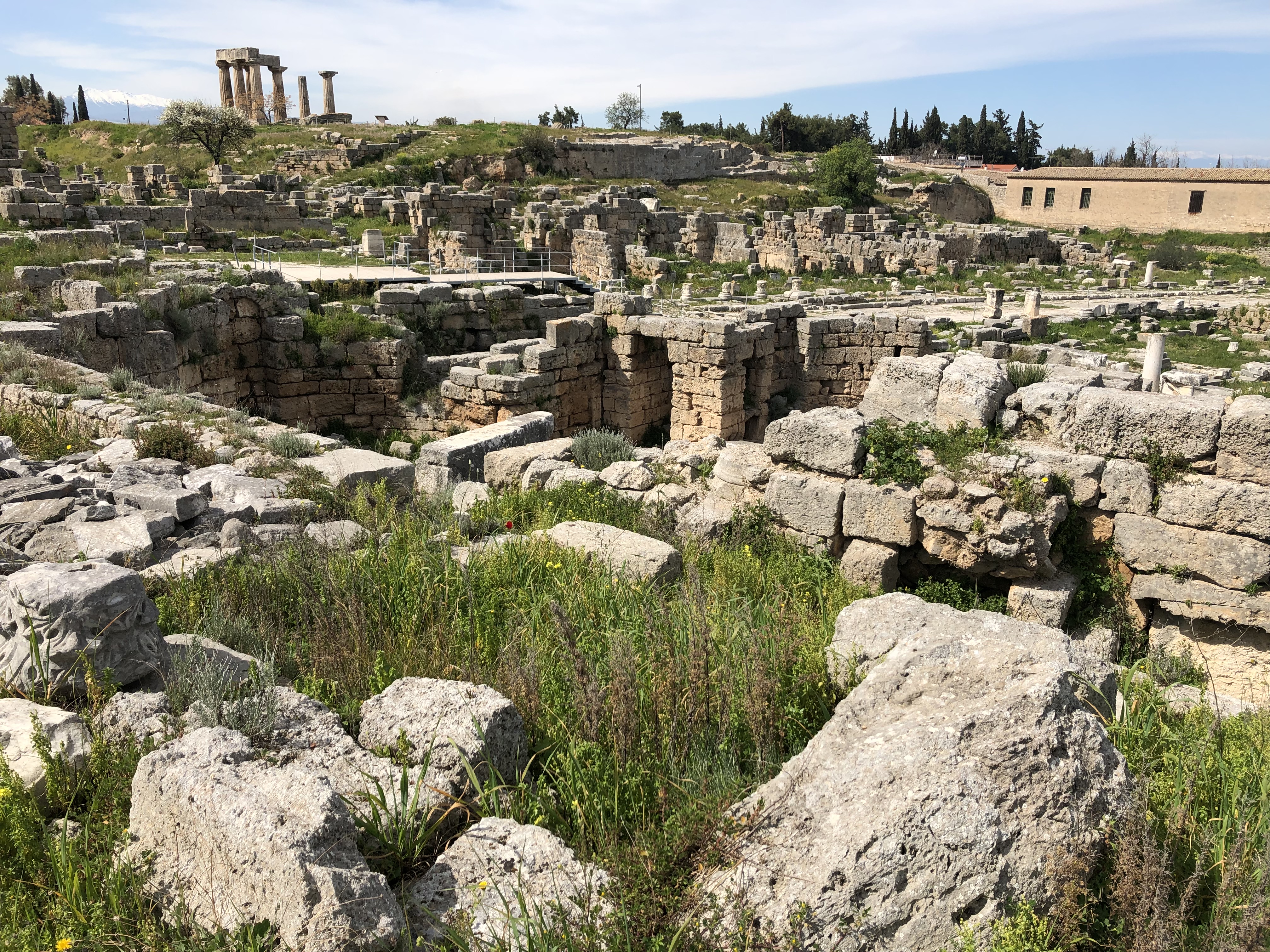
One of the things we know about Paul is that he was a leatherworker who often made tents, with friends like Priscilla and Aquila. During the considerable time that he spent living in Corinth he must have made many for the travellers and entrepreneurs who passed through the city, as well as its residents. They were often used by those who travelled by ship to give shelter from the elements on deck. But they wore out and needed to be replaced.
There are at least two things that we can draw from Paul’s metaphorical use of tents here to describe the human body. The first is its mortality: like tents, bodies wear out. The second is life as journey/pilgrimage: it is easy to see an allusion to the Tabernacle of Exodus here – it was used in the desert and led people to the land of promise. It is the first of these that is primarily in mind (Paul’s as well as mine, I think!), and underneath the metaphor is the unspoken yet assumed view of Paul’s anthropology that to be human is to be embodied spirit.
Hitherto, in the light of 1 Corinthians 15, I had understood Paul to picture deceased Christians in disembodied spirits until the day of resurrection, when they will be given a ‘spiritual body’ like the resurrected Christ (1 Cor 15:42-49). I tried to view 2 Corinthians 5 in the light of that, and, like many others before me, found that difficult. How does an eternal ‘heavenly dwelling’ that is given at death relate to a ‘spiritual body’ on the day of resurrection? Has Paul changed his mind?
It seems to me that Paul has not so much changed his mind, but changed his perspective. In 1 Cor 15 he is speaking from the perspective of one who expects to be around when the day of resurrection occurs – he will be transformed while others are raised. It is the perspective of one who will be on earth when this happens, and is described accordingly. When we come to 2 Cor 5, he writes as one whose body has experienced great trials and has become like the worn out tents he so often worked to replace. Now he is thinking about things from the point of view of one who is certain he is going to die. How will I experience this? What will happen to me in relation to the embodiment of spirit that makes me human? And so he writes about the eternal dwelling in heaven that he will be given on his death so that his spirit will not be found ‘naked,’ ie disembodied.
It is not clear from the text whether or not this experience takes place at the ‘bema’ of Christ – the seat from which the local Tribune dispensed justice. However, my inclination at the moment is that it does because of the way the text flows. That, however, raises a whole lot more questions for another day.


 Steps on The Way