‘Come and See’

At Priestfield we are studying John’s Gospel between Christmas and Easter and I produced a small lenten resource based on readings in John called ‘Come and See.’ You can find a PDF version of it here to download if you would find it helpful on your spiritual journey.

Come and See - Lent


Come and See – Reading John through Lent

Posted in Uncategorized | Leave a comment

‘…I bear on my body the marks of Jesus.’

IMG_0270 Today, the Chaplaincy Team had the joy of visiting the base of the RC Chaplaincy – St Albert the Great, run by the Dominican Order. In the garden, a stunning  new Chapel has been built to accommodate a lively worshipping community of locals and students.

We often underestimate the way in which our physical surroundings influence the way in which we worship and the impact they have on our spirits – I have experienced this effect in more than one congregation! This space is a light, beautifully designed and crafted space that connects well with the creation around it.

One of the things that struck me about it was the quality of the stone, and in particular, the markings on the stone caused by the action of the masons. I felt that I was looking at the extension of a metaphor that occurs in the New Testament, where the members of the church are spoken of as ‘living stones.’ Each of us has our own place in the construction of this holy temple that is a place of worship to God. But in order for us to fit into it, the hand of the mason has had to shape us with a variety of tools. Each of us bears in our lives the marks of the one who has built us into this temple of living stones. We bear in our body the marks of Jesus, just as Paul did, but probably in very different ways. We will carry these marks upon our lives as long as we are part of the temple.


IMG_0267

Posted in Uncategorized | Leave a comment

Wonderstruck – at polar bears

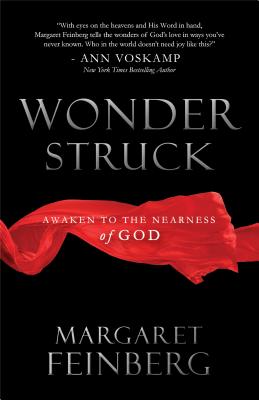
wonderstruck 2I’ve been receiving Facebook posts and emails from Margaret Feinberg’s PR folks for months now in anticipation of, and after, the publication of her new book Wonderstruck (link below). Not only is there a book but there’s also a study pack with DVD etc, and the hype is quite big. I haven’t yet read any of her books, though I have one lying in a pile to have a go at. But the word on the street (or at least on the web) is that her material is good.

True, her PR people are wanting to sell books, but I think that she is also wanting people out there to look out for things that make them gape in awe and point them in the direction of God. Yesterday an FB post encouraged us to pray each day to be wonderstruck at something, and, as it happened, I saw this after having been wonderstruck (I would normally say ‘gobsmacked’ but perhaps that doesn’t go down well with the US reading public) at a BBC wildlife programme.

WonderstruckGordon Buchanan (BBC link below) is following a polar bear family – a mother and two cubs – over the course of three seasons. The mother, having become pregnant and needing to hibernate, digs a snow den for herself. The cubs are born there and spend the first weeks of life in that tiny space kept warm enough by the body-heat of their mother insulated by the snow. Buchanan is following their trail, from first experience of daylight as the cubs pop their heads out of the den, through several months of the challenges to survive in the most inhospitable landscape.

Wonderstruck I most certainly was, at the capacity of such fragile scraps of life to survive in these surroundings, and so early in their experience to be able to walk with their mother for up to twenty miles a day, sustained only by her milk. And wonderstruck that she had not eaten for six months, losing half her body weight over the period. Now it was time to take the cubs out into the world looking for food to help her keep producing the life-sustaining milk, and to educate them in the ways of hunting. Only about half all polar bear cubs survive. We are waiting to see if one or both can get through their first year of life without falling prey to the many dangers that face them from fellow creatures and the cold wasteland around them. I need to record tonight’s episode.

I’ve put Margaret Feinberg’s book on my Amazon wish list. Whether I buy it or not is a decision for another day, but at least I am taking her advice and encouragement to pay attention to what is going on around me in order to be wonderstruck, and to look for God’s presence in the world around me.

http://www.bbc.co.uk/news/entertainment-arts-20908471

Posted in Books, Culture, God, nature | 1 Comment

Thanks Lord – and now the dancing: 25 years on

16 JJ&ParentsThe laughter is making its way to me as I write: five old girlfriends from university days, now fiftysomethings, are catching up the day after the night before. It’s good to hear, and confirms my thought that we are so blest to have so many lovely people to count as friends. Old friends.

The night before (Friday 11 Jan) was our delayed Silver Wedding celebration ceilidh, and for that we returned to the part of town where Jane and I were married, and which, in some ways, is still our spiritual home – Morningside. Not this time the old elegance of the Braid Hills Hotel that holds the happy memories of our reception on 28/11/87, but the function room of The Merlin on Morningside Road. More basic, to be sure, but it’s the people who make a party not just the venue. If we wanted to be picky we could identify things that we could have changed, but with an excellent small band and a group of people, young and old, determined to have a good time dancing, we had such a lovely evening of joyful celebration.

There were no speeches – at least not beyond an opening welcome from me and an acknowledgement that we are so grateful to God for how blest we have been in these 25 years. We didn’t want to talk to people but talk with them, catching up with news over a drink round a table.

Three and a half hours passed in moments, with dancers whirling round like the ghouls of Burns’s Alloway Kirk, and at the end we were both embarrassed and humbled by the way in which people sang their appreciation and stamped their feet – goodness knows why those in the bar down below didn’t complain!

As I looked round the room during the evening I was struck by several thoughts. What a wide variety of contexts are represented here: family, yes, but also Jane’s friends from P1 and Aberdeen University; folks from all three of the parishes we have served; work colleagues; Watson’s families we got to know through our children; students and Professors from the University of Edinburgh; folks from home and overseas. The net of friendship has been cast widely for us, and hopefully will grow wider yet.

And what lovely people we have been blest with as friends. The path of friendship often meanders and some friends are easier to relate to than others, but as my mind recalled the journeys we have taken together, all-in-all we could hardly wish for a better group of people – and my heart swelled with joy, for they are our friends. We are the link, for some of them the only link, that brought them together.

Underneath these thoughts – and above and round about them – was  a deep and contented sense of thankfulness to God for all that we have received in these two and a half decades. The camomile tea had helped assuage my late-afternoon anxiety and, just like the Wedding Day itself, there was a calm confidence that allowed me to enjoy the experience as it happened. Now, in the moments of reflection, there was the feeling that we were being held – embraced in a love that can only be measured by a cross. Or perhaps by the eternal cord that twists into three loops that is the Celtic symbol of the Trinity. This symbol was printed on our Wedding order of service and we made it the mark of our family life. I’m looking at a piece of slate hanging on my study wall into which the symbol has been carved. If our life together is in the hands of the one who made the universe, the one who became incarnate and gave himself for us, and the one who makes us more like Jesus, then we are in safe hands no matter what turn life takes.

These many years ago I remember thinking, ‘Gosh, when it’s our Silver Wedding I’ll be sixty!’ And so it has proved. I have my bus pass. Now I’m thinking, ‘When we celebrate our Golden Wedding I’ll be 85.’ The chances of making it are not good given the average age of the men of former generations of my family. But we’ll gladly take whatever we get and use as many opportunities as we can to celebrate what we have received. How much dancing there will be may depend on how the knees bear up. SDG!
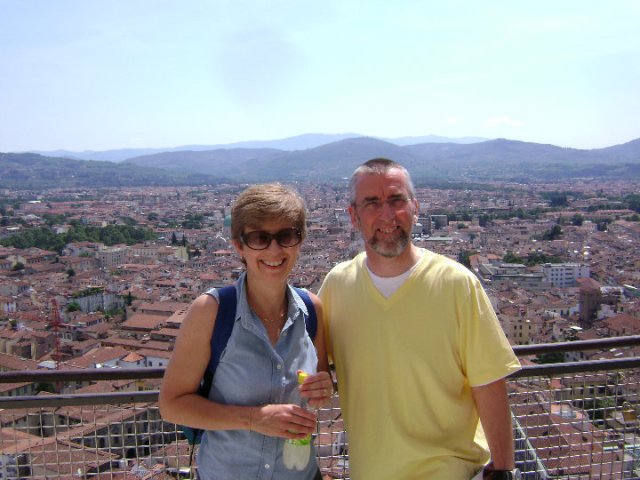
J&J Florence

Posted in Faithfulness, Family | Leave a comment

How God Became King – 3 Inadequate answers.

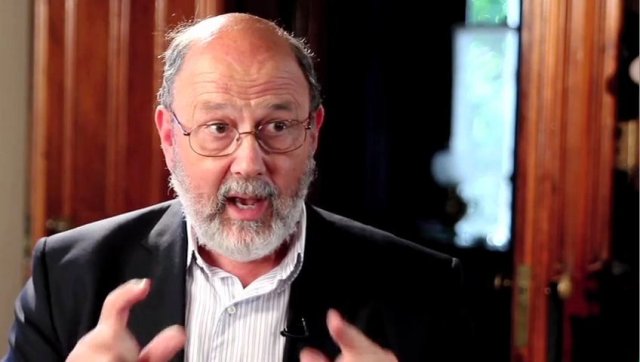
How God became King - cover picI am posting this because I signed up for a reading group called ‘Let the reader understand’ which is first of all reading and reflecting on Tom Wright’s (NTW) book How God became King, so to help me get a handle on it I thought I’d write short(ish) blog entries, mainly to summarise for myself what I’m reading in order to help my own understanding. Anyone else is welcome to join in. Either comment on the accuracy or otherwise of the summary, or make some observations about the implications of what NTW is saying.

Part 1 of the book consists of 3 chapters that are introductory, setting out how NTW sees the issues, and how some others have given what he considers inadequate answers to them. This blog is on Chapter 3.


How God became King – Chapter 3 The Inadequate Answers – brief summary

Having argued that churches have usually jumped from the nativity of Jesus to his cross, NTW asks, ‘So what did they do with the middle bits?’ In this chapter he details six answers (of more that he has identified) that he thinks are inadequate.

  1. That Jesus came to teach people how to get to heaven when they die. In short, the ‘Kingdom of Heaven’ as Matthew calls it, is about the rule of heaven coming to earth, not people going in the other direction. (In long, try ‘Surprised by Hope’ or ‘The Resurrection of the Son of God.’) While ‘eternal life’ is about the quality of the life of the ‘age to come’ rather than quantity of time – everlasting existence.
  2. Jesus was a good moral teacher – we don’t have to believe in him to benefit from his ethics. But Jesus was announcing something greater – the Kingdom of God – a new world that was being born, without which his teaching does not make complete sense.
  3. Jesus as moral example – he came to show us how to live. Actually, he shows how far short we fall. Yes, there is to be a growing element of imitation of Jesus (as Paul writes) but it is held in a framework where he is doing something new that will change things for everyone.
  4. Jesus as Perfect Sacrifice – a perfect life makes him the only one able to give himself for us (that we might get to heaven). Truth here, but occurs rarely in the Gospels, and would be said more clearly if it was the major reason for the ‘middle  bits.’
  5. Stories we can identify with – when we read the stories we can identify with various characters and find our own way by seeing what happened to them. A lot to this, but not a main aim of the Gospel writers. Have to ask about the story line – where they have come from and where they are going.
  6. To demonstrate the divinity (or humanity) of Jesus. Yes, they think of him as divine (and human), but they presuppose it rather than try to prove it. The storyline of Jesus is part of the storyline of what Israel’s God is doing. The ‘Messiah’ or ‘Son of God’ (Messianic title) is none other than this Jesus. We cannot talk of his divinity without speaking of his coming kingdom (or we end up with a detached spirituality like Gnosticism). Only when the story the gospels tell is integrated with the dogmas the creeds are teaching can we be sure we are on the right track.

Displacement Activities – what has happened.

a)    we know the gospels are important – inspired witness to Jesus.

b)   we know what is important in theology – divinity and meaning of his death.

c)    we assume this is the primary message of the gospels.

We have missed the main meaning of the gospels and developed strategies to make alternative sense of them. Time to look afresh at the central texts.


NT_Wright

Posted in Uncategorized | Leave a comment

‘That woman has some big heart.’

That’s what we said when we saw the BBC’s DIY SOS Big Build from Huntingdon. ‘That woman’ is Julie Jones, a single mother with three grown up sons whose best friend was diagnosed with a malignant brain tumour. But before she died, her husband had a brain haemorrhage and died quite out of the blue. So it was that five young children were left orphans in a very short space of time.

Julie took them into her own family, adopting them rather than fostering, taking her child count from three to eight in one fell swoop. Needless to say that although they were all glad to be together, the house was far too small for anything like a normal family life.

Which is where DIY SOS comes in. Hundreds of people wrote to them putting the case for Julie and her family to be the beneficiary of the Big Build – the special edition for large projects that make a great difference to the groups helped. A small team of experts were joined by a vast array of local tradesmen who were giving freely of their skills and time to make this transformation happen, all in the space of nine days.

The story that gave rise to the build was both incredibly sad and yet inspiring. Out of the deepest tragedy sprang compassion and community, and those involved have had their lives changed for ever.

Watching this as a Christian there were lots of questions and observations that occurred to me.
Why did such awful experiences happen to this one family?
What inspired Julie Jones and her family to show such love and compassion?
The hundreds of people who nominated the family for the BB and gave their skills to help, give a glimpse of the life of the Kingdom of God on earth as in heaven.

The one clashing note, and something that brings only disgrace to our state, is the fact that because the children are adopted rather than fostered, there is no additional financial support, despite the fact that had the children been placed in care they would probably have cost the state tens of thousands of pounds per annum. Surely some of that money could have been given to adapt the house and provide for their needs.

Several times listening to the interviews we were having to fight back the tears. I think that Jesus would be proud of the big heart that Julie has, and it would be hard to find a more deserving cause for the BB.

20130106-203914.jpg

Posted in Uncategorized | Leave a comment

Sometimes…

So, Borgen has started again (spoiler alert!), and it was a very moving and powerful first episode relating to the war in Afghanistan in which the PM changed her mind amid the pain and grief of the loss of life. It was a bit strange seeing the man who was the PM in The Killing III acting a grieving father and talking to the female PM. But what a job he made of it, and hearing him read his son’s goodbye letter was like listening to a truly bereft father who could not initially understand why his son had given his life. Seeing it through the lens of the son’s views of helping 89,000 children in Afghanistan changed his mind and was instrumental in the PM changing hers – very much against her will and desired policy.

Yes, I’m sure there would be political ‘spin’ in the story that maybe wouldn’t match the total picture and other facts and figures, not to mention moral judgments, could be made for the opposite side. But the overall message of the episode, from the war to the PM’s unwanted divorce was, ‘sometimes we have to do things we don’t want to do.’ Words placed in the mouth of several characters so perhaps there was a bit of overkill, but it made me think: what would I be prepared to do because I have to rather than because I want to?

I wish I could say that I came up with some answer to what is a very telling question, but I didn’t even dare to consider it too deeply. I guess the problem is that you never really know until you are faced with the ‘thing.’

20130105-225820.jpg

Posted in Culture, Discipleship, Family, God | Leave a comment

How God became King – 2

How God became King - cover pic

I am posting this because I signed up for a reading group called ‘Let the reader understand’ which is first of all reading and reflecting on Tom Wright’s (NTW) book How God became King, so to help me get a handle on it I thought I’d write short(ish) blog entries, mainly to summarise for myself what I’m reading in order to help my own understanding. Anyone else is welcome to join in. Either comment on the accuracy or otherwise of the summary, or make some observations about the implications of what NTW is saying.

Part 1 of the book consists of 3 chapters that are introductory, setting out how NTW sees the issues, and how some others have given what he considers inadequate answers to them. Chapter 1 was on ‘The Missing Middle’ – his observation that the life of Jesus is often skipped over, going straight from birth to cross.

Chapter 2 is the Opposite problem.
What happens when people concentrate on the middle (life of Jesus, teaching and actions) without the ends  birth/death/resurrection/ascension)?

There are several effects
– misreading Jesus – seeing Jesus as a misguided/deluded prophet/apocalyptic
– misreading the gospel – striving for social change/justice but without religious anchor that Jesus gave it
– misreading Jesus’ teaching – yes he did talk about God (& the church talked about Jesus) but he did it to explain his own kingdom work, which in turn illustrates who he is in God’s Kingdom. (When the church omits some of its core teaching from the gospels it has to fill the gap eg expanding its Christology to fill the hole.)
– misreading the place of God in life – God is banished from philosophy, science, culture & politics. (I feel less able to comment on this, but he sounds convincing.) The Gospels to tell us how God is king on earth as in heaven. For this misreading cf the Rabbis after bar-Kochba revolt – they concentrated on religion rather than theocracy.
– Orthodox responses – the challenges from Reimarus onwards have sent conservatives looking for the wrong thing in the Gospels – seeking the divinity of Jesus rather than kingship of God, hence have largely missed the latter. This K of God is not yet complete but is eschatology in process of realisation. (Evangelicals – instead have gone for a gospel of personal salvation. )

So far, NTW has shown the consequences of dividing the life of Jesus up – only using the ‘ends’ or the ‘middle.’ Neither gives a satisfying explanation either of Jesus or the purpose of the Gospels. Chapter 3 will take us to some answers that he thinks are inadequate, bringing to completion the ground-clearing exercise.

Look out for the next exciting instalment!

NT_Wright

Posted in Uncategorized | Tagged | Leave a comment

How God became King – 1

How God became King - cover pic I signed up for a reading group called ‘Let the reader understand’ which is first of all reading and reflecting on Tom Wright’s book ‘How God became King,’ so to help me get a handle on it I thought I’d write short(ish) blog entries. If you know the book, please join in, and if you don’t then it might be worth buying – it’s fairly cheap on Amazon.


Why is Tom Wright interested in writing this book? Because he thinks that the four canonical Gospels have been both sidelined and misunderstood: sidelined in favour of Paul’s interpretation of the ‘gospel’ and misunderstood in terms of their overall purpose.


In chapter 1, ‘The Missing Middle,’ he seeks to prove that the life of Jesus has been omitted when it comes to understanding what the Gospels are about, and that this has had serious consequences for our understanding. Is he correct?


Is he right about the MM?

– in the Creeds – undoubtedly, as they jump right over the life and ministry of Jesus, and it seems to me he is probably right that when the church has had to choose between creed and canon she has chosen creed, which has influenced how we understand the Gospels – they are for bolstering the beliefs of the creeds.

– in the Western Church – certainly within the tradition in which I grew up (Brethren) and I believe in wider Evangelicalism (perhaps less so now, but that is in part because of Wright and others)

– in (conservative) biblical scholarship after Bultmann –  it would indeed be an irony, and perhaps he overstates the degree, but it is largely true in my experience of conservative biblical scholarship, at least until recent years – one of the reasons why I like scholars like Joel Green and his commentary on Luke.

p20 purpose of the book – to correct this distortion of the church’s belief: the creeds focus on Jesus being God, the Gospels on God becoming King.


At this point Wright does, I think, assume on generalities that he is correct in identifying the purpose of the Gospels, but perhaps he has to here with a view to defending that later.


Quote I liked:

p20 ‘It is by his inaugurating old God’s kingdom, in his public career and on the cross, that Jesus reveals the father’s glory.’

NT_Wright

Posted in Books, God | Leave a comment

The interview with God

This was sent to me by our friend Nora.

The interview with God

I dreamed I had an interview with God.

“So you would like to interview me?” God asked.

​“If you have the time,” I said.

God smiled. “My time is eternity. What questions do you have in mind for me?”

​“What surprises you most about humankind?”

God answered:
“That they get bored with childhood, they rush to grow up, and then long to be children again.”
“That they lose their health to make money and then lose their money to restore their health.”
“That by thinking anxiously about the future, they forget the present, such that they live in neither the present or the future.”
“That they live as if they will never die, and die as though they had never lived.”

God’s hand took mine and we were silent for a while.

And then I asked, “As a parent, what are some of life’s lessons you want your children to learn?”

“To learn they cannot make anyone love them. All they can do is let themselves be loved.”
“To learn that it is not good to compare themselves to others.”
“To learn to forgive by practicing forgiveness.”
“To learn that it only takes a few seconds to open profound wounds in those they love, and it can take many years to heal them.”
“To learn that a rich person is not one who has the most, but is one who needs the least.”
“To learn that there are people who love them dearly, but simply do not yet know how to express or show their feelings.”
“To learn that two people can look at the same thing and see it differently.”
“To learn that it is not enough that they forgive one another, but they must also forgive themselves.”

“Thank you for your time,” I said humbly. “Is there anything else you’d like your children to know?”

God smiled and said: “Just know that I am here, always.”

Posted in Discipleship, God | Leave a comment