11 November – some reflections

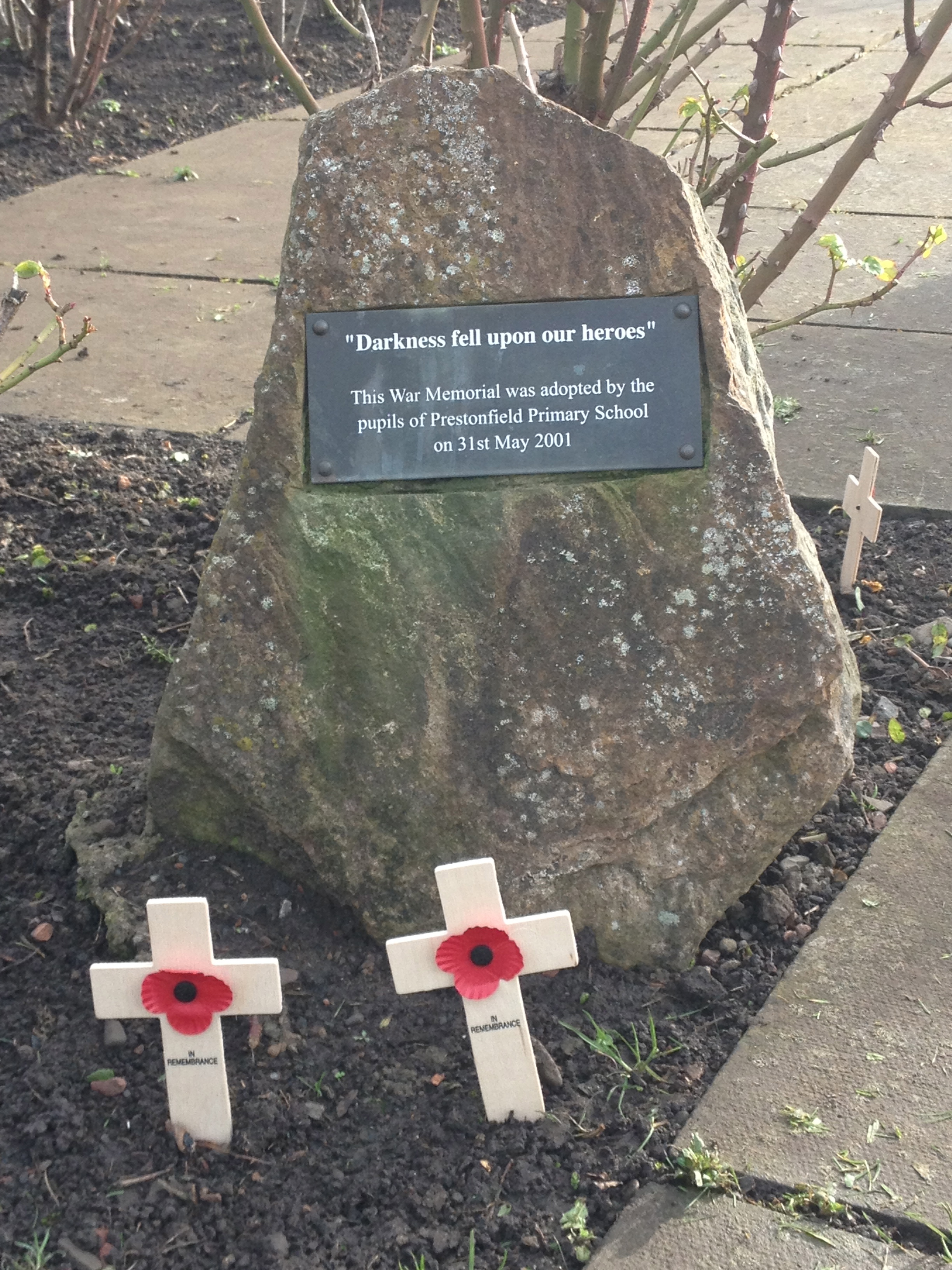
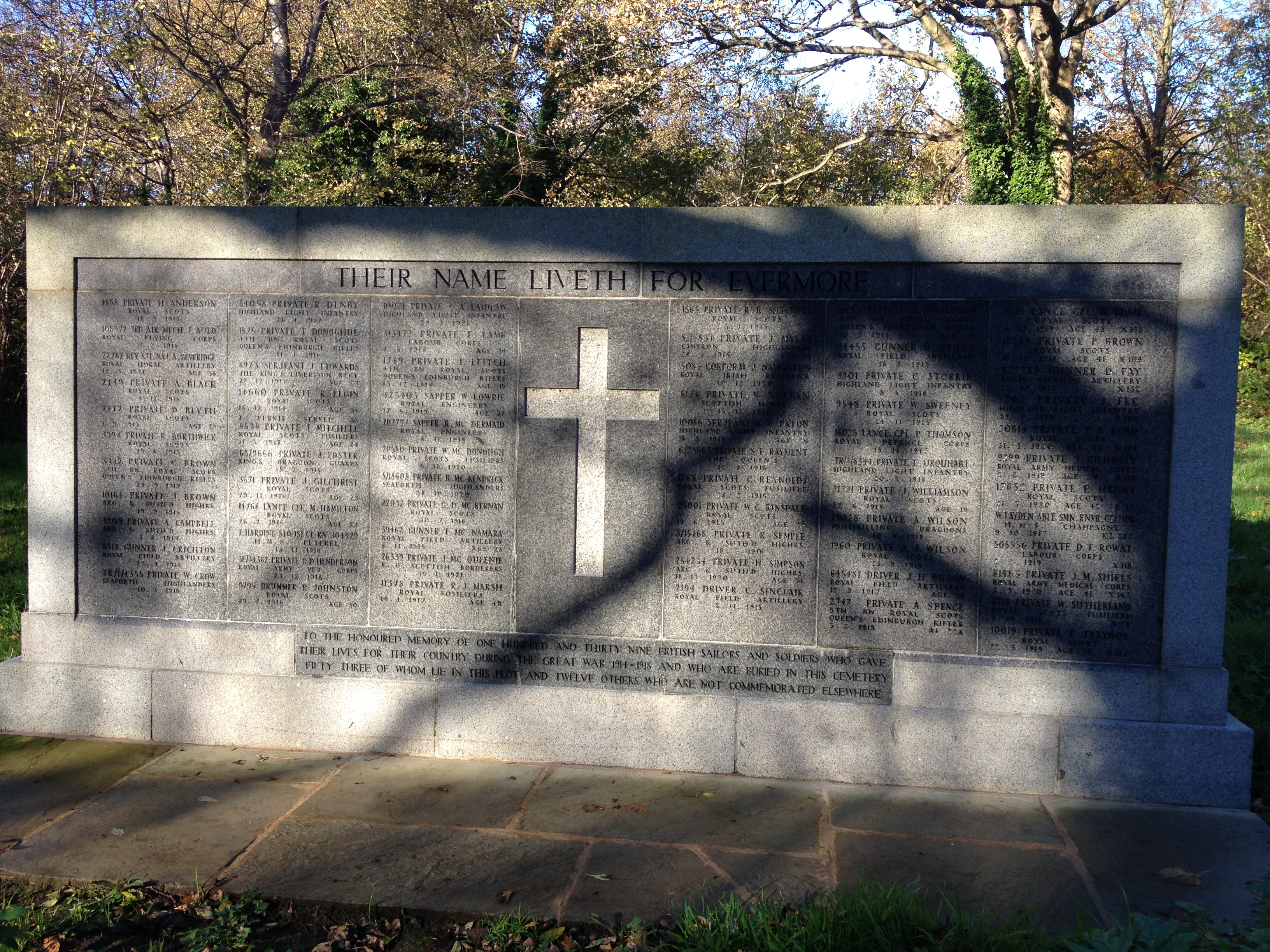
This morning’s Remembrance Service was the best attended of the four I have conducted at the Prestonfield War Memorial within our parish. What was most interesting about it was the people who were there – the sheer variety. There were older people whose parents had paid for the memorial decades ago, and who remembered the families of the people whose names we read out. There were younger people from babes in arms, through primary school age to young students in their twenties. These included some from countries who were on ‘the other side’ of the major conflicts being remembered, and this confirmed for me the need to see these commemorations as more than Remembrance.

It seemed to me that there are, in fact, at least four words beginning ‘Re’ that should mark these occasions.

Remembrance

Of course Remembrance should be the first of these words. Looking to the past and recalling the events and people is a first step. Remembrance leads to thanksgiving for sacrifices made and without remembering what took place in the past we cannot learn from it. Remembrance of courage, of loss, of global scale, of the depth of suffering: all these put us in touch with the past and allow it to touch us inside in a way that few things have the power to do. Remembrance helps us to see the present with fresh eyes.

Repentance

Repentance is a Gospel word and, contrary to common use does not primarily mean being sorry for doing something in the past. It means to change direction. Repentance means to turn around and travel another way, take another path. Standing in front of a War Memorial with the names of those who died in conflict engraved upon it should make us want to travel on a pathway that does not lead to war and death. We always have to ask, is there a better way?

Reconciliation

When we have people of different nations round the memorial, especially people whom we have always thought of as being on ‘the other side,’ it opens the mind to see things in new ways for we begin to see what we do at such events through the eyes of others. Is what we do and say more likely to turn this ‘enemy’ into a ‘friend’ as we mourn our common loss, or are we in danger of giving the conflicts of the past the power to destroy our relationships in the present? The Memorial must become a place for reconciliation where remembrance of things past teaches us that the best way of avoiding war is to turn our enemies into our friends.

Renewal

Each Remembrance Day has its own particular impact upon us. From year to year I refresh my understanding of the past by reading something about it – this year marks 70 years from the second battle of El Alamein in which my late Father-in-law participated and I read an extract of ‘All Hell Let Loose’ by Max Hastings – and by listening to the stories told during the Festival of Remembrance broadcast on the Saturday night. Stories of bravery and loss bring home to us the personal experiences of war and its cost. So it is that, just as we cannot step into the same river twice, we are different people coming to the Memorial each year. And we leave different people. The corporate experience of shared remembrance leaves its mark upon us and we can return to the world of ‘normal’ life with a renewed sense of hope and responsibility to make the world a better and a safer place for our children and grandchildren.
Posted in Remembrance | Leave a comment

14 October – Finding Mercy and Grace

Below is the message I gave yesterday at the Robin Chapel in Edinburgh.

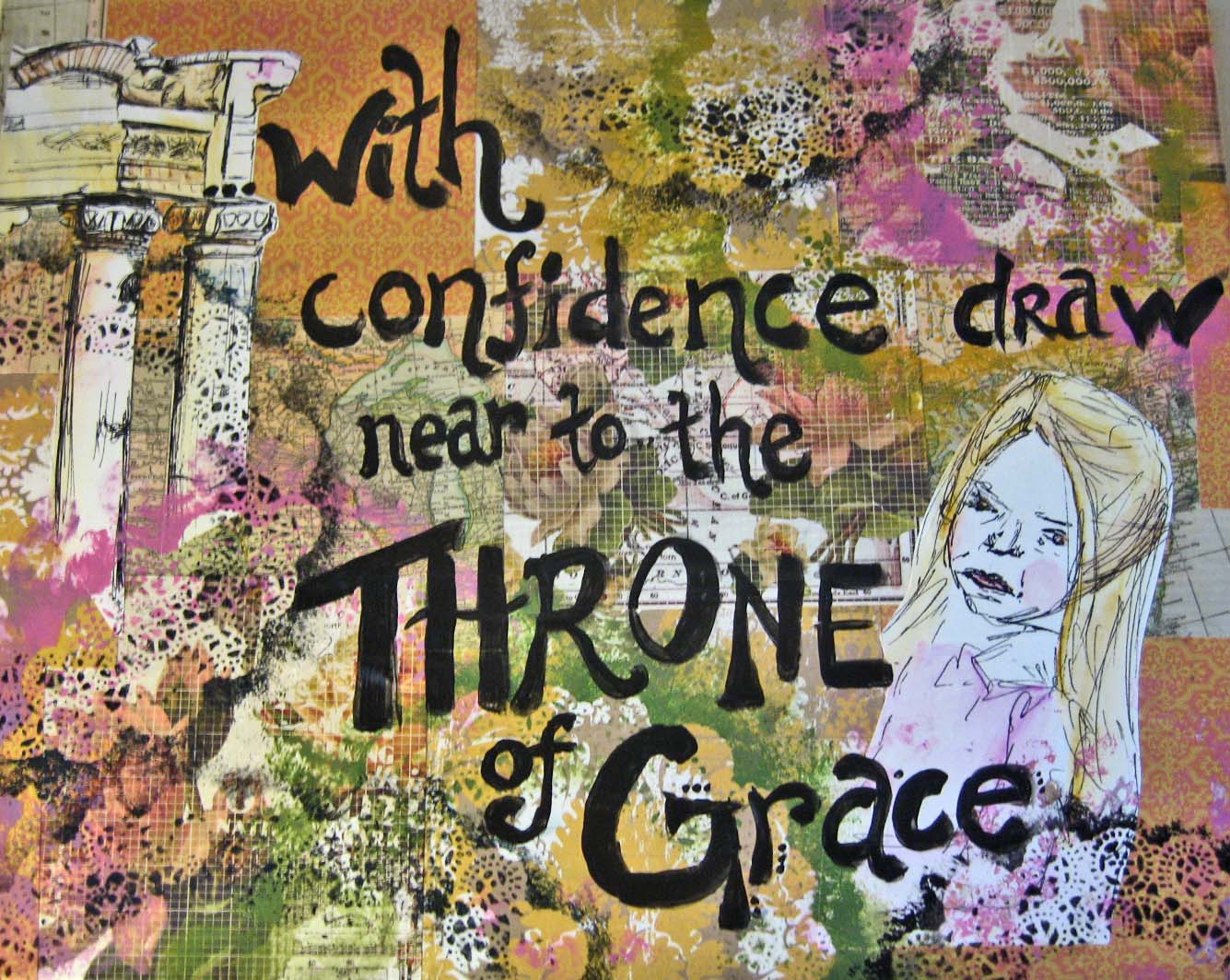
Let us approach the throne of Grace – Hebrews 4:12 – 16

Introduction

The Letter to the Hebrews is one of the most enigmatic books in the whole of Holy Scripture. Really, it is less of a letter and more of a sermon – perhaps that’s why it seems so long! Why do we find it so difficult? Maybe because it was written to Messianic Jews who were under pressure to revert to the old beliefs, and the writer draws deeply from the wells of OT story, ritual and theology. Whoever wrote it (and that in itself is a mystery) claims that Jesus fulfils and is greater than what has gone before, and therefore things like the sacrificial system is now unnecessary – even if it does cast light on what Jesus has achieved.

As Christians of a generation that has little missional encounter with Jewish people, unlike the first century, we need to remember that their story is our story and they are the rock from which we’ve been cut. It may be a little harder work to struggle with Hebrews, but it might just be worth it.

Hebrews 4:12 – 16

Today’s passage might just convince us that it could be worth it because, in a very short compass, the author cleaves us open with the living and active sword of the word of God, and then puts us back together again with a picture of Jesus that, in its beauty and relevance, is rarely surpassed throughout the NT.

There is within Hebrews the recognition that we, with all the generations that have preceded us, are sinful human beings. To stand before the holiness of God as a sinner is an awesome place to stand, particularly when the inquiring word of God opens up our actions, the motivations for our actions along with our hopes and desires. Which of us could stand unaccused?

Rather than leave us a quivering wrecks before God our author desires to lead us to the place where all the accusations that stand against us can be dealt with – the place called ‘the throne of grace.’

It is there, in front of the throne of God, that someone is standing as our High Priest. The picture is taken from Yom Kippur, the Day of Atonement – this year it was 25-26 September, the holiest day in the Jewish calendar. For that was the day, the one and only day of the year, that anyone at all could enter the place called the Holy of Holies – the Most Holy Place – and it had to be one person, the High Priest.

In the most holy presence of God, the High Priest would make an offering to God and pray for himself and the people, that their sins would be wiped away.

Jesus, the writer tells us, has gone through the curtain of the heavens into the immediate presence of God and there he pleads the merits of the sacrifice he himself has made, and prays that the sins of his people will be wiped away.

But although he is the Son of God, there is no sense that he is above the fray or has no idea what human life, with its traumas and temptations, is all about. Using the double negative our author writes, he is not one who is unable to feel our weaknesses, for he has experienced them for himself. One of the most powerful messages of the incarnation is that there is before God someone who knows what it is like to be us – yet without sin.

And so it is that we are invited to come before this throne of grace through Jesus our High Priest – and to come with boldness. When we do, what are we to expect?

Mercy: so much is made by so many about the judgment of God, but the writer of Hebrews always balances it by telling us of the mercy of God. The desire of the Almighty is not to punish but to restore, and it is here that we find the mercy we so greatly need to lift our heads, our spirits and our actions that we may live as children of our heavenly Father.

Grace: if mercy restores, grace strengthens. Even at the deepest point of our need we can find the gracious strengthening of God, and we know that we are loved and helped.

It is through this enigmatic writer we discover that Yom Kippur is not 25-26 September in 2012, it is every day, for every day our High Priest stands before God pleading the eternal benefits of his death on the cross and as we approach that throne every day, so we find mercy and grace.

Posted in Uncategorized | 1 Comment

Hillsborough

Have been greatly struck by the passion and articulacy of the families of the Liverpool fans who died at Hillsborough. Their deeply held and appropriate sense of injustice has been so motivational – they too are people who ‘Inspire a generation.’ What has been so uninspiring is the rank abuse of power of so many parts of our establishment. God forgive us, and let justice roll like rivers.

Posted in Uncategorized | Leave a comment

Summer Reading

A box of books

Some weeks before we head on holiday I always find a box and start putting books into it ready for sitting under a shady tree with a glass of wine for a peaceful read. The box is a mixture of popular novels and not too heavy books on theology. I usually read one kind then the other. There are those who prefer non-fiction but one of the reasons I like to read stories is that they so often give us an insight into the human condition. Of course some (most?) of the stories are unbelievable – we suspend our usual critical faculties to enjoy them. But that’s not the point. They provide a lens into the world around us and help us understand the people to whom we are reaching out. After all, most of the Bible comes to us in story form for that reason.

Lifelong learning

Theology books are more like work, but the trouble is I also enjoy reading them – at least the ones I can understand. As Christians we are not great at feeding our faith through on-going learning. Sunday morning studies are never enough to fill us; they can only whet our appetite for a pattern of learning rooted in our discipleship of Jesus. I encourage you to try out some book on the Christian faith that will help you on your journey. Faith and learning are lifelong, and some of the books come in audio form for those who find reading difficult.

Although most of the books are hard copy and in the box, I also have some on my iPad, including Common Prayer, several Bible versions and reading notes. It’s great being able to carry a library in your hand, but I do love a real book in the hand.

Posted in Uncategorized | Leave a comment

Gay Marriage – some thoughts

I set down these thoughts with some trepidation, but today I had ‘scribbler’s itch’ and had to get them out my head.

A lot of heat is being generated and a lot of ink is being spilt on the subject of Gay Marriage – this is being written on the day that the Scottish Cabinet is discussing the issue. In time it is expected to endorse GM as a principle while Cardinal O’Brien is saying it would be ‘madness.’ As far as I remember, all contributions to the debate that I have noticed so far have been based on the prior judgement of what one thinks of homosexual relationships (committed or ephemeral). I want to take the question, ‘Should Gay Marriage be allowed in Scotland?’ out of that context and answer it regardless of what I think of gay relationships. First, I ask and answer a question; second, I make an observation.

The question is, ‘Who has the right to decide?’ At the moment there is an argument over whether MSPs should decide (in which case it would be passed overwhelmingly) or should there be a referendum? In that case the result would be more uncertain but opponents of GM think it would be blocked by the majority of voters. Latest polls suggest otherwise but I doubt if a referendum will be agreed to anyway. However, if it were to take place, effectively the denominations of the Church are saying that they do not have the right to impose their beliefs and ethics on others (especially in a multi-faith society) and have conceded that the State, by whatever democratic means, has the right to decide. Neither the College of Cardinals nor the General Assembly is in a position to make this decision however strongly expressed are their religious views.

It seems to me that there is also an irony. Some members of Churches that are more independent and/or Anabaptist (especially in the political sense of that term) support the idea of a referendum. They are thereby (unwittingly?) effectively adopting a Christendom model of Church simply because they think it would be more likely that their anti GM view would prevail. That would be using the machinery of State to sustain their religious belief and impose it on others. On the other hand, in the case of the Roman Catholic Church, there is a sense that it would be happier if we returned to the days of the Holy Roman Empire when the Pope had much greater political power to influence and decide on such matters. But those days have gone, probably never to return.

Ministers, Priests and others who are authorised to conduct weddings do so not only on the basis of their position within their faith group, but also under the authority of the State. They are both servants of the Lord and servants of the Law, but it is the Law that says whom we are authorised to marry within any particular jurisdiction. How many times have I said to couples, ‘no schedule, no wedding’? Why? Because to conduct a wedding without the document from the Registrar would be illegal rather than contrary to my religious beliefs.

If it is the State that has the right to decide, then the Church can live with (or die with) whatever the State decides. The Romans weren’t terribly bothered with what the Church wanted and the Body of Christ not only survived but thrived in its first Centuries within that Empire.

My answer to the question, therefore, is that the State has the right to decide these legalities and let’s live with whatever it decides.

Second, the observation is that this is a matter of religious freedom. I’ve been puzzling over the difference between GM and Civil Partnership because all the legal protection necessary for committed couples is contained in CP. Why bother with GM? The answer seems to be that those who have some kind of faith commitment want to be able to express their personal commitment to each other within that faith setting. In which case, within a culture where homosexual relationships are legally recognised, this becomes a matter of religious freedom, whether or not we agree with GM. All couples of all faith groups who endorse GM, who want to live in that way and publicly acknowledge their commitment within a faith context should have the right to do so. That is, as long as there is the equal religious freedom to disagree and not be required, as an agent of the State, to conduct such ceremonies.

I have another, related, issue that this debate has raised for me, and which could do with further exploration as the Church continues to emerge from the Age of Christendom.

Should Ministers and Priests cease to be agents of the State in the conduct of weddings? Should all weddings be Civil Weddings, as in Hungary, and people then be left to arrange any religious celebration of that marriage? I participated in a joint Hungarian-English celebration of a marriage in St Stephen’s Basilica, Budapest the day after a Civil Wedding. It was a memorable occasion and the joy and solemnity of the occasion was undiminished. Perhaps this is what the future holds for us – and the world wouldn’t come to an end because of it.

Let me say again, this argument is being put forward without endorsing or opposing homosexual relationships. We are going to have to learn to live with that tension within the Church, or resolve it with ‘Disruption,’ but it seems to me that the argument between Church and State is settled. At least it is in my mind. You have to make up yours.

Posted in Uncategorized | 1 Comment

Reflection for Vets’ Graduation

Below is a reflection I gave at the start of the Graduation Ceremony for the Vets on 30 June. It was a great celebration and good to see some Priestfield friends getting their degree.


It’s a privilege to share with you in this graduation ceremony. I congratulate you all on your achievements under the pressures you have faced and wish you well for the future in these difficult days.


There is a certain irony in having been asked to offer this reflection to vets because shortly after the invitation was accepted we discovered that one of our dogs, Meg (a collie, needless to say) will need to be put to sleep in the near future (I’m glad I wasn’t invited to the Medics!) – so you will forgive me if I follow a long tradition and burst into tears at any point. That tradition of tears was shared by hard-bitten farmers in the Foot and Mouth disease outbreak of 2001, by those watching Animal Hospital as Rolf Harris and an old man cried on each other’s shoulders over an ailing German Shepherd and Planet Earth Live viewers were on tenterhooks recently as three baby elephants survived being swept away in a swollen river.


Pets, farm animals, wild animals – in our culture we are touched by all of them.


In the Hebrew Bible there is a story in which in turn God brings the animals to Adam and he gives each of them a name. The main point of the story is that no animal companion is fully adequate for a human, but the story also points out to us the strength of the link between human beings and the animal kingdom.


On this day when you start your life beyond vet school, remember the privilege you have as human beings caring for animals. Remember that when you touch and care for pet or farm or wild animals, you also touch an intrinsic part of our humanity. You mediate our care for you have the skill to do it.


But you must also mediate for the animals. Where, as human beings, we fall short of the care that is required of us, where we consciously or unconsciously abuse the animal kingdom you must challenge us about our willingness to abuse, for in diminishing the animals, we diminish ourselves.


So amid the muck and blood, the fleas and ticks, remember that you have a calling to care, and that in living out this calling you are reflecting a high purpose among the creatures inhabiting this planet.


Jared Hay.

Posted in Uncategorized | Leave a comment

Why did the chicken cross the road?

Some of this is very clever and funny, so I thought I could share it with you. It’s found on rutgers.edu and given my association with NJ and Sandy Strachan who posted it on FB it would not be unreasonable to share it. Enjoy!

 
WHY DID THE CHICKEN CROSS THE ROAD?
 Plato:
         For the greater good.
 Karl Marx:
         It was a historical inevitability.
 Machiavelli:
         So that its subjects will view it with admiration, as a chicken
         which has the daring and courage to boldly cross the road, but
         also with fear, for whom among them has the strength to contend
         with such a paragon of avian virtue?  In such a manner is the
         princely chicken’s dominion maintained.
 Hippocrates:
         Because of an excess of light pink gooey stuff in its pancreas.
 Jacques Derrida:
         Any number of contending discourses may be discovered within the
         act of the chicken crossing the road, and each interpretation is
         equally valid as the authorial intent can never be discerned,
         because structuralism is DEAD, DAMMIT, DEAD!
 Thomas de Torquemada:
         Give me ten minutes with the chicken and I’ll find out.
 Timothy Leary:
         Because that’s the only kind of trip the Establishment would
         let it take.
 Douglas Adams:
         Forty-two.
 Nietzsche:
         Because if you gaze too long across the Road, the Road gazes
         also across you.
 Oliver North:
         National Security was at stake.
 B.F. Skinner:
         Because the external influences which had pervaded its sensorium
         from birth had caused it to develop in such a fashion that it
         would tend to cross roads, even while believing these actions to
         be of its own free will.
 Carl Jung:
         The confluence of events in the cultural gestalt necessitated that
         individual chickens cross roads at this historical juncture, and
         therefore synchronicitously brought such occurrences into being.
 Jean-Paul Sartre:
         In order to act in good faith and be true to itself, the
         chicken found it necessary to cross the road.
 Ludwig Wittgenstein:
         The possibility of “crossing” was encoded into the objects
         “chicken” and “road”, and circumstances came into being which
         caused the actualization of this potential occurrence.
 Albert Einstein:
         Whether the chicken crossed the road or the road crossed the
         chicken depends upon your frame of reference.
 Aristotle:
         To actualize its potential.
 Samuel Beckett:
         It got tired of waiting.
 Buddha:
         If you ask this question, you deny your own chicken-nature.
 Albert Camus:
                The gods had commanded it to cross and recross the road.
 Winston Churchill:
                It was moving into broad sunlit uplands…
 Howard Cosell:
         It may very well have been one of the most astonishing events to
         grace the annals of history.  An historic, unprecedented avian
         biped with the temerity to attempt such an herculean achievement
         formerly relegated to homo sapiens pedestrians is truly a
         remarkable occurence.
 Salvador Dali:
         The Fish.
 Darwin:
         It was the logical next step after coming down from the trees.
 Emily Dickinson:
         Because it could not stop for death.
 Conan Doyle:
                It is quite a three-pipe problem, Watson.
 T. S. Eliot:
                To examine the wasteland for worms.
 Epicurus:
         For fun.
 Ralph Waldo Emerson:
         It didn’t cross the road; it transcended it.
 Richard Feynman:
                Surely it was joking.
 Johann Wolfgang von Goethe:
         The eternal hen-principle made it do it.
 Ernest Hemingway:
         To die.  In the rain.
 Werner Heisenberg:
         We are not sure which side of the road the chicken was on, but it
         was moving very fast.
 David Hume:
         Out of custom and habit.
 Saddam Hussein:
         This was an unprovoked act of rebellion and we were quite
         justified in dropping 50 tons of nerve gas on it.
 George Mallory:
                Because it was there.
 Jack Nicholson:
         ‘Cause it (censored) wanted to.  That’s the (censored) reason.
 Pyrrho the Skeptic:
         What road?
 Ronald Reagan:
         I forget.
 John Sununu:
         The Air Force was only too happy to provide the transportation,
         so quite understandably the chicken availed himself of the
         opportunity.
 The Sphinx:
         You tell me.
 Mr. T:
         If you saw me coming you’d cross the road too!
 Henry David Thoreau:
         To live deliberately … and suck all the marrow out of life.
 Mark Twain:
         The news of its crossing has been greatly exaggerated.
 Molly Yard:
         It was a hen!
 Zeno of Elea:
         To prove it could never reach the other side.
 Beatles:
                It was a long and winding road…
 Pennsylvania/NJ travel guide:
                When travelling along the Road, visit the beautiful town of Chicken
                Crossing.
 George Bush:
                Read my lips: no more chicken crossing roads.
 O. J. Simpson:
                His wife lived across the road.
 Umberto Eco:
                It was a part of the Plan.
 ???
                He was solving the cross-road puzzle.
 A palusible Russian explanation:
                They ran out of vodka, and he wanted to get to the liquor store
                three miles down the road.
 Elmer Fudd:
                He cwossed the woad to kill the wabbit. 
 Charles Dickens:
                It was the best of times, it was the worst of times, chicken were
                crossing roads, chicken were staying behind…
 Orwell:
                All roads are crossable by all chicken, but some roads are more
                crossable than others.
 Dostoyevsky:
                After having killed an old hen, the chicken was wandering deliriously
                along the empty night streets of St. Petersburg and waiting for the
                darkness that never came; he crossed Nevsky and after a while found
                himself in an unfamiliar part of the city.
 ???
                To prove that he was no chicken.
 ???
                Because for every road you cross, there are ten more roads yet
                uncrossed.
 Ecclesiast:
                There are times for the chicken to cross roads and there are times
                to stay at the roadside.
 Hamlet:
               For ’tis better to suffer in the mind the slings and arrows
               of outrageous road maintenance than to take arms against a
               sea of oncoming vehicles…
 Sappho:
               For the touch of your skin, the sweetness of your lips…
 J. R. R. Tolkein:
               The chicken, sunlight coruscating off its radiant yellow-
               white coat of feathers, approached the dark, sullen asphalt
               road and scrutinized it intently with its obsidian-black
               eyes.  Every detail of the thoroughfare leapt into blinding
               focus: the rough texture of the surface, over which count-
               less tires had worked their relentless tread through the
               ages; the innumerable fragments of stone embedded within the
               lugubrious mass, perhaps quarried from the great pits where
               the Sons of Man labored not far from here; the dull black
               asphalt itself, exuding those waves of heat which distort the
               sight and bring weakness to the body; the other attributes
               of the great highway too numerous to give name.  And then it
               crossed it.
 Dorothy Parker:
               Travel, trouble, music, art / A kiss, a frock, a rhyme /
               The chicken never said they fed its heart / But still they
               pass its time.
 Darth Vader:
               (Whshhhhhhhhsh) Because it could not resist the power of the
               Dark Side.
                                  [_Princess Bride_ section]
 Wesley:
               It’s terribly fashionable, I think everyone will be doing
               it in the future.
 Fezzik:
               Because if it did not it would be like a toad!
 Inigo:
               Hello.  My name is Inigo Montoya.  You crossed my father’s
               road.  Prepare to die.
                                                ______________
 George Bush:
               To face a kinder, gentler thousand points of headlights.
 Julius Caesar:
               Because Pompey threw the die.
 Moses:
               Know ye that it is unclean to eat the chicken that has
               crossed the road, and that the chicken that crosseth the
               road doth so for its own preservation.
 Bob Dylan:
               How many roads must one chicken cross?
 T. S. Eliot:
               Weialala leia / Wallala leialala.
 T. S. Eliot (revisited):
               Do I dare, do I dare, do I dare cross the road?
 Paul Erdos:
               It was forced to do so by the chicken-hole principle.
 Zsa Zsa Gabor:
               It probably crossed to get a better look at my legs, which,
               thank goodness, are good, dahling.
 Martin Luther King:
               It had a dream.
 James Tiberius Kirk:
               To boldly go where no chicken has gone before.
 Groucho Marx:
               Chicken?  What’s all this talk about chicken?  Why, I had an
               uncle who thought he was a chicken.  My aunt almost divorced
               him, but we needed the eggs.
 John Milton:
               To justify the ways of Chicken to men.
 Sir Isaac Newton:
               Chickens at rest tend to stay at rest.  Chickens in motion
               tend to cross the road.
 Wolfgang Pauli:
               There already was a chicken on the other side of the road.
 Wolfgang Pauli (bis):
               NEIN, NEIN, NEIN, YOU ARE COMPLETELY WRONG!!
                               … Chicken what?
 Margaret Thatcher:
               There was no alternative.
 Joe Premed:
               It was a requirement.
 Edgar Allan Poe
               Never More.
Chief Dan George
               It was a good day to Die.
???
               He was daft.
Posted in Uncategorized | 1 Comment

Reflections on Pentecost and Stewardship

Today we celebrated Pentecost at Priestfield by concluding our series on Stewardship. So far we had looked at our stewardship of creation, our relationships (on Christian Aid Sunday, so especially with the poor), our money and finally it was time to think about our stewardship of the gifts the Spirit gives. You can find the PowerPoint at http://www.priestfield.org.uk

But on Pentecost, it’s important to think about the gift of the Spirit before thinking about the gifts of the Spirit. The wind and the fire in Acts 2 tell us about the breath of Life the Spirit gives, and the journeying holy presence of God with us that guides us and burns up the dross to make us more like Jesus. The Sprit may be a gentle breeze sometimes, but perhaps is more likely to be a howling gale, blowing away the cobwebs, refreshing us and empowering us.

In 1 Corinthians 12 Paul reflects on the nature and purpose of the gifts the Spirit gives, but as those who read this passage in very different circumstances and culture we have to ask questions that help apply his teaching to my life in my time.

What gift(s) has the Spirit given to me? Maybe others can help me identify them.

Am I using them for the common good and not just for myself?

Am I using them with acceptance and humility – without either a sense of inferiority or superiority?

There is, however another question we need to ask – one that looks to the future and the ministry of our congregation.

What gifts does our church need at this time? We need to pray that the Spirit will give them to us, enabling to fulfil our local calling.

Posted in Uncategorized | Leave a comment

Bending towards justice

This morning I am watching the start of the trial of Ratko Mladic at The Hague and memories were stirred of my youth. I remember being fascinated by the trial of Adolf Eichmann, who was deeply involved in the implementation of the Holocaust. Eichmann was apprehended by Israeli agents in Argentina in 1960, put on trial in 1961 and executed in 1962. For months, newspaper pictures showed him in the dock behind a bulletproof screen while the court heard the chilling details of Eichmann’s activities – many of which seemed to be ‘everyday’ transport logistics, but which took countless thousands to their efficiently arranged deaths.

Eichmann was on the run for 15 years, hidden within some communities who knew him and those who did not. But eventually he was tracked down and placed before a court. In the end, his deeds were made known to the world and he had to answer for them.

Fresher in my memory is the foreboding and anger of the Balkan crisis of the 1990s. Time after time the political commentators prophesied that, on the election of Slobodan Milosevic in Serbia, Yugoslavia would descend into civil war. So it proved. The consequences of that civil war are well documented and probably the best known atrocity committed by either side was the massacre of Muslim men and boys at Srebrenica in 1995. Under Mladic’s command, Bosnian Serb fighters captured a so-called ‘safe area’ guarded by 400 Dutch UN peacekeepers. Frustratingly, these 400 UN soldiers did not have a mandate to engage in combat to defend civilians in danger and so walked out of the city leaving its inhabitants to the terrors of those who wanted to cleanse the land of their kind. After giving the people hope of safety, the world’s nations abandoned them, innocent civilians, to their deaths at the hands of Mladic’s execution squads. (The culpability of the UN in this incident must wait for another time, but I remember my deep frustration and anger that we deserted those whom we knew would die.)

But now Mladic is in the dock facing his accusers, another war-criminal being brought to justice after many years on the run having been sheltered by some communities who knew him and perhaps some who didn’t.

Eichmann was not the first fugitive from justice to be apprehended and Mladic will not be the last. The older I get and the more of these tragic events I see across the years the more I remember two quotations. The first is of classical origin which I learned in my school English class: ‘The mills of God grind slow, but they grind exceeding small.’ The other was used by Martin Luther King to predict that however long it took, the Civil Rights Movement would succeed: ‘The Arc of the Moral Universe Is Long, but It Bends Toward Justice.’

It should grieve all of us who have an ounce of humanity that justice should take so long to catch up with whose deeds are so calumnious. However, while it must never make us complacent, it is uplifting to know that sooner or later justice will be done. And if, perchance, they should escape the grasp of justice on earth, they, and we, will not evade giving account to God of all that we have done.

Posted in Uncategorized | Leave a comment

Le Changement C’est Maintenant

Change Now!

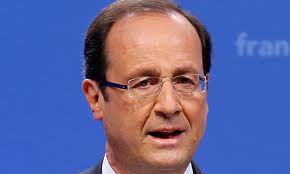
This week will see the inauguration of a new President of France, François Hollande, who was elected on the promise of ‘Le Changement c’est maintenant.’ He promises change, and change now. It got me to thinking about change and how we respond to the need for it.

There is no doubt that, throughout the ‘Western World,’ there is a need for change. We have an economic system and ethical values that have gone awry. But when we shout for change (now!) we often think, let’s change the President, or the Government, or the Church Minister, or the system. If we make these changes then all will be well. Then we discover that the new person or process in whom/which we put our trust is just as flawed as the last.

The changes we seek need to begin in ourselves, not others. It is our desires, hopes, ambitions and behaviours that need to be changed – but that will require help from beyond us. It is only through the transforming power of the Holy Spirit at work in us that we can change. Yet when we are changed we can help to transform what is around us. May God help us to see our own need for change, give us the power to do so, and then bring that transforming power to bear on a needy world.

Posted in Uncategorized | 2 Comments