Back to ‘normal’?

Today was the day that life returned to ‘normal.’ The festive season is over, our daughter returned to University, our son to school and my wife will return to choir practice tonight. So the alarm went off at 7am and they were out the door by 8am and if the first few days of normalcy feel hard and don’t feel normal then they soon will. To tell the truth, it’s something of a relief for family life to get back to a degree of predictability and allow the body clock to sort itself out.
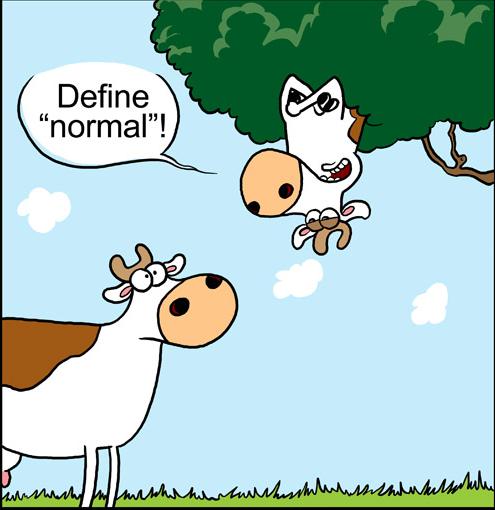
The trouble with ‘normal’ is that…well, it’s normal. It can be boring. We can lose the sense of the wonder of life, or the joy of surprise. But sometimes in the middle of normal we get the phone call or experience the event that takes us way out of its comfort zone. That happened to us one normal Sunday night in 2005 when the phone rang and we were told that my father had died. Suddenly ‘normal’ had gone and a new ‘normal’ would have to be created.

Over the course of the last few weeks we’ve had to adapt to a new normal, and there will be times in 2012 when it changes again – after the summer we expect both our kids to be students away from home and that new normal will take some getting used to. (As I was writing this, another unconditional offer came in for our son, so, God willing, this normal should come to pass.)

One of the most astounding passages in the Bible is to be found in a book with the haunting title of Lamentations – its name expresses its nature, reflecting on the horrific experience of the citizens of Jerusalem as the city was captured and razed by the Babylonians. Amid this catastrophic derailing of ‘normal’ we find these words:

22 The faithful love of the Lord never ends!
His mercies never cease.
23 Great is his faithfulness;
his mercies begin afresh each morning.
24 I say to myself, “The Lord is my inheritance;
therefore, I will hope in him!” (Lamentations 3:22-24, NLT)

Those who remained in Jerusalem and those who were exiled took a while to make the words of the prophet their own – not surprising really, because hard questions had to be asked and answered. Jewish people had to do the same after the Holocaust. But how astounding an insight it was for this person who had experienced such devastation to realise that within each new day there is a demonstration of the love and faithfulness of God.

There will be times when we don’t feel that – indeed when we feel just the opposite. But we cannot live without hope, so where will we find it? It is my fondest desire that in good times and bad I will have the faith and courage of this writer to find my hope in the Lord for whom love and faithfulness are normal.

Posted in Faithfulness, Family, God | Leave a comment

Go and do likewise

There are times when I realise that I’m pretty hopeless at this discipleship business. Off the top of my head I can think of two basic problems: I’m blind to ways in which it challenges my actions; I can see how I need to change but inside make an act of will not to. I’m sure there will be other, more complicated, reasons why I’m hopeless, but these two come top of my pile.

On Christmas Day, yes, Christmas Day, after my third Christmas service celebrating the Nativity of Jesus, a man drifted into church at coffee time and we gave him coffee, a mince pie and some chat. He was still there when I left – the need for sleep before Christmas dinner and guests arriving was getting the better of me – and as I stepped on to the street another man said, ‘Are you closing up?’ I answered truthfully and said, ‘Yes, we’re closing up.’ He turned to walk away and said, ‘Ok, happy Christmas.’

I knew inside me that he was not asking if we were closing but if he could come in – come in to church on Christmas Day, even if it was after the service and only for a coffee and mince pie. In that moment of decision before answering (truthfully) I thought of my need for sleep, and the imposition it would be on the people inside if I took this man back inside on Christmas Day when they were looking to close up and be with their families. What I failed to think of – sufficiently at least – was this man’s need for some food and company on Christmas Day. He showed more grace to me in saying, ‘Happy Christmas,’ than I showed to him.

When Jesus told the story of the Good Samaritan – Sunday’s theme from Luke 10 – there was a more than superficial sophistication in the way he exploited the interplay of racial and religious dynamics. Tell the story again today and insert ‘Palestinian’ instead of ‘Samaritan’ and we regain some of the power of its impact. But the need of the wounded man was clear, even to those who passed by. He needed medical attention and ongoing rehabilitation, and he was willing to receive both from the compassion of a stranger and despised foreigner who was willing to give them at his own cost and inconvenience.

Sometimes it’s more difficult for us to identify the specific needs of people who come to us, or we may be less certain about the resources we can lay our hands on to meet them. But I suspect that when we allow ourselves to be moved by compassion we will come to see their situation with the eyes of Jesus and simply do something that we believe is right for that moment. The question is whether or not the coldness of our hearts will freeze out the warmth of compassion? Or will there be sufficient compassion to melt the icy heart? As Tom Wright says (Luke for Everyone, p129), ‘No church, no Christian, can remain content with easy definitions which allow us to watch most of the world lying half-dead in the road.’

Having been bothered by my Christmas Day discipleship cracker, and repented of it, I was walking down the street yesterday and saw a young man sitting begging. It was cold and he was shivering. Rather than pass him by I put a coin in his cardboard cup. I think I might have done it to make me feel better rather than him, but I did wonder afterwards, was that what he really needed? In the absence of some long term solution, might it have been better to buy him a coffee and sit with him for a wee while? I suppose at least  I’m beginning to ask the questions, even if a bit too late.

What I can’t get out my head is what Scot McKnight calls the ‘Jesus Creed’ – the greatest commands are love of God and love of others – that gave rise to the story in Luke 10, and also the words that Jesus’ inquisitor left with ringing in his ears: Go and do likewise.

Posted in Christmas, Christology, Discipleship | 3 Comments

‘How was your Christmas?’ – 2

I’ve just been lent a book by Tom Troeger called ‘Wonder Reborn: creating sermons on hymns, music and poetry’ (Oxford: OUP, 2010). Leaving aside the obvious, ‘What about the Bible?’ question, the title struck a chord (sorry) because of the way in which the joy of Christmas touched me this year, and gave me something to say on Christmas Eve. It was through unexpected encounters with a couple of carols. Both of them came to me via ‘friends’ on Facebook who posted links to performances on YouTube – electronic interconnections deserve a post of their own, but I thought it was really interesting how these connections are becoming much more pervasive. And I’ve used it to justify buying an iPad. But back to the carols…

They are quite different in style and performance so I was wondering what linked them within me – they are not even in the same language. I’m convinced it was a number of things: the quality of the singing and the beauty of the music; the way in which the words express not only the fact of the Incarnation but its purpose and outcome; and I guess, as well, our own personal context as a family.

The first Carol was ‘Sing, sing all earth’ by Maddy Prior and the Carnival Band. It is unaccompanied singing in a rustic folky style, but the style, music and words all fit together to create a powerful call to worship ‘Jesus Christ our heavenly King.’ When I heard it I replayed it many times and sang along in my head.

The second was Adolphe Adam’s  ‘Minuit Chrétiens’ – sung in English as ‘O Holy Night.’ This came to my notice in a variety of ways: the English version was sung by the choir at the University of Edinburgh’s Lessons and Carols Service; my FB friend posted a French version sung by Roberto Alagna, with graphics from the movie ‘The Nativity’ and complained bitterly about the wishy-washy nature of the English translation; waking up early on Christmas Eve I heard the Alagna version on Classic FM and was entranced by the power of his singing. Not only did I download a similar version by him (having sought in vain for the same one in MP3), but around its first and last verses I restructured all I wanted to say at the Watch Night Service (with fairly literal translation!).

We all know the power of music and many of our clearest memories have a soundtrack. This was certainly true of me this year. God just seemed to use these songs to speak to me that I could speak to others. Both Carols were played in the service as we approached Christmas Day. Their meaning was explained/preached and I think the message was used to communicate something of the wonder of the Nativity to those who were present.

I don’t expect that others will necessarily feel the same way about these carols, and, after all, the Christmas context is past. But in case you would like to try them for yourself I’ve attached the YouTube links – enjoy.

http://www.facebook.com/l.php?u=http%3A%2F%2Fwww.youtube.com%2Fwatch%3Fv%3Dy_6XAYngy30&h=IAQF11j_0AQHcgEpvsGRa3XTikDxCPTkUdxyaV0SRepHq2w

http://www.youtube.com/watch?v=CugcfrR83c8

Posted in Christmas, Worship | 1 Comment

‘How was your Christmas?’

The festive period is now over, although residual parties continue to punctuate the diary through the first half of January. But this seems like a good time to jot down some impressionistic thoughts on Christmas and New Year while the events are still fresh in the mind.

First, I notice that I am increasingly less enamoured with, and more intolerant of, the prevailing Western culture’s big Christmas ‘Santa Claus’ story. The Big Man in the Red Jacket with the White Beard has totally displaced the Christ Child in the Swaddling Bands lying in The Manger.  More and more Santa seems like a consumerist fraud to dupe people into spending more money on presents that are not needed and/or can’t be afforded.  And each year it succeeds. Christians are little if anything better than others in this regard. We compound the felony by sending endless cards to one another, whose graphics have nothing to do with the Holy Family or the Nativity, but instead have the near ubiquitous robin pictured in a snowy scene of any generation from early Victorian to the present day.

It seems to me that our only hope of subverting (I was going to say ‘competing with’ but there is presently no competition) the big story of Santa is to keep telling the story of Christmas as the Story of Jesus through every medium we have available – cards, presents, services, movies, presentations, conversations and so on.

It is with this attempt at subversion that the second thing comes to mind: festive events that have spoken to me. For some reasons – they could be explored here but I won’t – it was later and shallower that the ‘Christmas Spirit’ touched me this year. God help me if the mystery of the Incarnation ever ceases to cause me wonder, but sometimes our human situations get in the way. However, in recent years a couple of annual events have come to mean a great day to me: the George Watson’s College ‘Nine Lessons and Carols’ service in St Giles (at which I have presided for the last three years) and the Edinburgh Royal Choral Union’s New Year performance of Handel’s Messiah, in which Jane sings. I think I’ve figure out why.

The ‘Santa’ story of Christmas is a story detached from moorings. There’s nothing that leads up to it and once he’s gone, he’s gone – until the captains of commerce need him again next year. But the Lessons and Carols sets the story of the Nativity, our Christmas Story, in the context of the Big Story of God’s involvement with the world. It runs from Creation to New Creation. It is a story that makes sense in its entirety and gives meaning and context to the story of the birth of Jesus. Similarly, the Messiah tells the Big Story but in a different way. It uses the lens of this one person to tell the story of sin and redemption. Some might quibble about passages from the Bible that are included in the story, but the point remains the same: the Big Story of God in the world is being told through the tale of the Messiah – Jesus.

Perhaps what we need to do as the Church, at Christmas and throughout the year, is simply to use the old ways and find more inventive ways of telling the story – the Big Story – of Christmas.

Posted in Christmas, Christology, Culture | Leave a comment

Happy New Year

So it’s now 2012, and a New Year lies ahead. It’s a year of excitement in prospect for us with a ‘big birthday’ for me in September and our Silver Wedding in November. But it’s a long time since, for a variety of reasons, I’ve approached a new year with such a sense of foreboding. There are a lot of possibilities out there, and a lot of things that can go wrong.

It was at this point that I remembered a few of the lines from the poem by Minnie Louise Haskins, oft quoted in this context and remembered because King George VI used it in his address to the nation in wartime. However, they still resonate and have something to say:

And I said to the man who stood at the gate of the year: “Give me a light that I may tread safely into the unknown.” And he replied: “Go out into the darkness and put your hand into the Hand of God. That shall be to you better than light and safer than a known way.”

Now all I need to do is take the advice. Happy New Year.

Posted in Culture, New Year | 1 Comment

Eating with Jesus – Luke 5

Christmas Food and  New Year Resolutions

I do hope that you had a refreshing and enjoyable time over Christmas  whoever you spent it with, and however much you ate. As we embark on the  journey through another year, today we are reflecting on the place of food in  life and the way in which, at this time of year, we often make decisions to  change – change what we do and the kind of people we are.

Our Priestfield studies in Luke’s Gospel are going to include several  thinking about what Jesus did and said at meals. You don’t have to read far in  Luke before you find references to food, meals, banquets, suppers and the like.  Food not only had an important role in sustaining the body for work; the context in which it was eaten was the hub of Jesus’ engagement with other  people. He taught, healed, forgave, discussed and reprimanded around the table.  It was a place of gracious hospitality and a method for mission.

On New Year’s Day, we reflect on the call of Levi and his response to  Jesus (Luke 5) – throwing a great banquet to introduce Jesus to others. As he responded  to the call, ‘Follow me,’ he knew it was the start of a new life and that he  had to change his ways. This meal was a sign to others that he was a new man.

In our culture, Christmas and New Year are times when food is especially important to us – we often eat with family and strangers at meals  and parties; we give and receive hospitality. May these be times when, like Levi, we are able to introduce people to Jesus, and when we realise that there are things that need to change in our lives as well.

Living as disciples means that the past cannot be allowed to enslave us and that the future is open to be shaped for us by Jesus. May 2012 be an open future when each of us, individually and congregationally, realises that Jesus is holding on to us as we walk through the dark valleys and sunny  pathways.

Have a good week! Only 359 sleeps to Christmas.

Jared.

Posted in Christmas, Christology, Culture, Discipleship | Leave a comment

Hello world!

I thought I’d given up on New Year’s Resolutions a while ago, but have decided that I need to get into blogging in a more serious way so that I can get some much needed practice in reflection and have the opportunity to share my thoughts with a wider readership – or audience if you prefer.

So, welcome to my world and I hope that we’ll be able to learn together in a spirit of open minds.

Posted in Uncategorized | Leave a comment