2 Corinthians 5:1-10 is not about resurrection

On Monday 3rd June, a conference of Scottish University PhD students in Biblical Studies took place at New College in Edinburgh. There were many 20-minute presentations, and I gave one on the interpretation of 2 Corinthians 5:1-10, which is a major text in my thesis. So this blog is longer and more technical than usual, but I would be interested in reactions to it.

Introduction

In his 2003 NTL Commentary on 2 Corinthians, Frank Matera writes, “If [Paul’s] present bodily existence is destroyed – and it surely will be, since the outer self is wasting away – he knows that God has prepared a permanent form of bodily existence for him: the resurrection body that will be disclosed at the general resurrection.”[1] Matera believes that Paul is using a different metaphor to describe what he has already said in 1 Cor 15 and in this Matera is not alone. It is probably the prevailing interpretation of the text but he also recognises that there is “little agreement among commentators about their precise meaning.”[2] For many, this view seems to be the least worst option, despite the difficulties. The transformation from “tent-home” to “eternal dwelling” takes place at the parousia.

Today I want to challenge that view of Matera and others – without positing an alternative today – thereby eliminating one major view, which, in itself, is a way towards finding a more plausible interpretation.

Why is 2 Cor 5:1-10 not about Resurrection?

To achieve this aim, I will bring two arguments to bear, and will support them with details from this text and others.

  • First, because Matera’s paradigm of interpretation does not fit the language and rhetoric of the text.
  • Second, because Paul’s resurrection language elsewhere does not fit well with the language used here.

Language and rhetoric of the text

Before diving into the text, I urge a caution: many come to this text with a pre-formed anthropology and apply it to the text, rather than allowing this text to inform our understanding of Paul’s anthropology. This is one of the causes of confusion.

4:16-5:10 should be treated as a unit of text

The διὸ of 4:16 and the γὰρ of 5:1 and later uses of καὶ γὰρ, show 4:16-5:10 should be treated as a unit of text, building on what has gone before but developing Paul’s thought in new directions. And each section of this unit must inform the meaning of the others.

4:16-5:10 the flow and features of the text

4:16-18 makes some foundational statements about the frailty of human existence leading to abundant glory afterwards. In doing this Paul makes anthropological statements.

  • While the “outer self” is deteriorating, the “inner” is being renewed, and he encourages his hearers not to focus on the passing suffering and what is seen but the abundant and eternal glory, that is unseen.
  • The “outer/inner self” statements must be taken with due seriousness. Many, adducing little or no evidence, say these are looking at the whole person from a particular perspective, taking a “holistic” anthropological view. This might be legitimate looking at people in life, yet at death something happens to believers that separates the mortal body from whatever remains, and that which remains is still sustained “in Christ” through the downpayment of the Spirit. In death there is a division within the whole person. Paul, therefore, assumes some kind of dualism that is reflected in the “outer/inner self” language.
  • This dualistic language is confirmed when Paul writes that when the “earthly tent” is being dismantled, he longs to be “overclothed” with his “heavenly dwelling” so that he will not be found “naked,” implying that there is some part of him within that tent that would be naked without the overclothing.
  • When taken at face value, this more dualist form of language opens up the way to other interpretations of 5:1-10 that can reflect paradigms of human existence in the text that are about embodiment but not about resurrection. Are there ways in which the language of 5:1-10 would point towards another paradigm?

5:1-10 unpacks the statement in 4:18 regarding the things that are seen and not seen.

Please look with me at table 1 on your handout where I attempt to map out

  • The body of the “outer person” that is seen
  • The “outer” “inner” person references of 4:16 can map on to “tent” and “eternal dwelling,” “at home in the body, away from the Lord,” “away from the body, at home with the Lord.” When they are mapped in this way the flow of the text is better placed in a paradigm that interprets it as pre-parousia death rather than parousia transformation (see table 1).

The language of mortality:

In 4:16 and 5:1, there are two verbs that express the language of mortality.

  • 4:16 διαφθείρεται is the language of human deterioration because of our mortality as it applies to the “outer person.”
  • 5:1 καταλυθῇ is the language of destruction or dismantling as it applies to the “tent-house” (as the “outer person).

Effectively, these two verbs are talking about a process and the end of that process: deterioration and death. These vivid verbs are not the kind of language Paul uses in relation to what happens to a body in the transformational experience of the parousia or resurrection.

To interpret this passage within the resurrection/parousia paradigm, a time gap must be inserted in 5:1 between the destruction of the present body and the reception of the heavenly body. In order to do that “we have,” the present tense ἔχομεν, is given a future sense. Matera writes, “It is … likely that the present tense emphasises Paul’s firm conviction in what God has in store for him at the general resurrection of the dead.”[3] This use of “we have” is contrary to the natural meaning of the text and is only necessary because it is required in order to support the resurrection/parousia paradigm. If we give the text its natural meaning, a crucial plank of the paradigm disappears.

2 Corinthians 5:8 and Philippians 1:23

2 Cor 5:1-5, with its picture of “earthly tent” giving way to a “house not made with hands,” must also be read in the context of 5:6-10, in which Paul makes a statement similar to what he writes in Philippians 1:23. There he says, “my desire is to depart and be with Christ, for that is far better.” In 2 Cor 5:8 he writes, “we would rather be away from the body and at home with the Lord.” It appears that Paul wanted to die before the parousia to be in the presence of Christ as soon as possible.

The time gap between these two texts is indeterminate, but they illustrate that this was not a fleeting thought in Paul’s mind. He had an ongoing desire to leave this life in order to be with Christ, and it is likely, therefore, that he gave thought to what would happen to himself if he should die before the parousia. I believe that is what he expresses in this passage. 5:8 must be allowed to shed light on 5:1.

Conclusion

It seems to me that the language and flow of the text, together with its connection to Phil 1:23, undermine the resurrection/parousia interpretation and make it difficult to hold.
Paul’s resurrection language elsewhere

This section will be in two parts, focussing first on links between 2 Cor 5 and 1 Cor 15, then Paul’s resurrection language more widely.

“Links” between 2 Cor 5 and 1 Cor 15

One of the arguments used to sustain the resurrection/parousia paradigm is that there are strong links between ideas in 2 Cor 5 and 1 Cor 15. I will now examine several of these links to see if they are as strong as usually alleged.

Isaiah 25:8

Isaiah 25:7-8a NRSV reads, “And [the Lord] will destroy on this mountain the shroud that is cast over all peoples, the covering that is spread over all nations; he will swallow up death forever.”

1 Cor 15:54 quotes the “saying,” “Death has been swallowed up in victory.”

2 Corinthians 5:4 reads “so that what is mortal may be swallowed up by life.”

In 1 Cor 15 Paul pictures death as an entity in itself, consistent with his view of Death and Sin as powers that Jesus has disarmed and will destroy through his own death and resurrection. This is cosmic, apocalyptic material, and the scenario is that of a battle.

In 2 Corinthians 5:4 the reference is to the individual believer, and what is being swallowed up is their mortal humanity.  While cosmic powers may be at work at some point along the way in the processes of suffering and frailty, here they are not at the forefront of Paul’s mind in the way they are in 1 Corinthians.

Σῶμα

I want to note two things. First, 1 Corinthians 15:35-41 Paul uses σῶμα several times to describe all kinds of living beings– humans, animals, fish, and birds – and celestial objects – sun, moon, stars and the like. In 2 Corinthians 4:7-5:10 he uniformly uses σῶμα with the nuance that it is the site of the experience of human suffering, and as something frail and mortal. Second, 1 Corinthians 15 is speaking at the macro level while 2 Corinthians 4-5 is speaking at the personal, experiential level.

The meanings overlap but are differently nuanced.

Earthly and heavenly

1 Corinthians 15:40 Paul uses “earthly bodies,” to refer to the whole range of embodied earthly creatures, humans, animals, birds, and fish. The contrast he makes is with “heavenly bodies,” for sun, moon, and stars, with star differing from star. In using them to describe embodied objects on and above the earth, embodied living creatures on earth and embodied objects in the sky, Paul indicates that embodiment does not necessarily imply fleshly embodiment. He also uses them in 15:48 and 15:49 referencing the bodies of Jesus and Adam.

In 2 Corinthians 5:1, where Paul writes “our earthly tent-house may be dismantled,” he is solely referring to human bodies, specifically the frail and mortal bodies of believers, the tent-house we live in at the moment.

There seems, then, to be little difference in the way Paul uses earthly and heavenly in the two passages, save for the fact that 1 Corinthians 15 is more at the macro level than the micro level of 2 Corinthians 5. Once again it is the nuance that is different.

But an additional point to note is that given Paul’s wide-ranging use of σῶμα in 1 Cor 15, it is entirely possible that he has not exhausted his list of the possible types of embodiment possible for human beings.

Naked

In the case of 1 Corinthians 15:37 “naked” is being used to describe metaphorically the dead body of flesh of a believer as an individual seed kernel that will be buried for an unknown amount of time before being harvested at the resurrection. The idea in 2 Corinthians 5:3 is significantly different. “Naked” describes the possible reality of a believer’s “inner person” at death unless “over clothed with the “heavenly dwelling.” The word may be the same, but the referents and significance are totally different.

Clothed and Overclothed

1 Corinthians 15:53-4, Paul writes “It is necessary that what is perishable be clothed with imperishability, and what is mortal be clothed with immortality.” In order for a perishable and mortal believer to be able to exist within the fullness of the Kingdom of God, the body in which they exist needs to be clothed with immortality. This is the transformation that Paul says will take place at parousia, with resurrection for the dead and metamorphosis for the living.

On first examination, with its clothing metaphor, 1 Corinthians 15:53-4 sounds very similar to what Paul writes in 2 Corinthians 5:2 , “For also in this [tent] we groan, longing to be overclothed with our heavenly [dwelling].” However, there are points of difference.

For the sake of time, I mention only one, and it is the article that is being clothed. In 1 Corinthians 15 the thing that is perishable is the believer’s body of flesh and blood, and it is this that will be clothed with immortality at the transformation of resurrection. In 2 Corinthians 5:2-4, Paul’s fear in death, when his clothing of flesh has been dismantled, is that whatever is left once his flesh has gone will be “naked.” It is what is within his body of flesh that he is most concerned to have covered, the “inner self.” Thus, his desire is for something new to overclothe him and therefore he will still have a covering for what remains when that flesh has gone.

Conclusion:

While there are points of overlap in the meaning of some common terms in the two passages, there is no one-for-one equivalence, and there are significant differences in how some other terms are utilised. It seems to me that the links are not as strong as usually asserted, and they do not necessarily support the idea that Paul is speaking to the same subject in the two texts.

A wider look: tabular comparison with Rom 6, Rom 8, 1 Cor 15, 2 Cor 4:7-15, 2 Cor 4:16-5:10

Turning from 1 Cor 15 specifically, I now invite you to look at table 2 on the handout, detailing Paul’s resurrection language across a wider series of passages in which he is indubitably writing about resurrection, and also 2 Cor 5.

  • I have highlighted in red important and typical resurrection-theme language from elsewhere which is missing from 2 Cor 5.
  • I have highlighted in blue: important language from 2 Cor 5 that is missing in the other passages.

There are a few points to note here:

  • we should not assume that Paul has to use the same language all the time when speaking of the same theme. Yet…
  • while in 2 Cor 5 Paul could in principle be talking about resurrection in other language, several of his explicit resurrection words are absent here, and the words that are used are so different to the norm that it seems less certain than usually asserted that he is talking about resurrection/parousia.
  • Often, when Paul uses metaphors to describe death and resurrection, he specifically draws the comparison – Rom 6, water baptism is baptism into Christ’s death in order to be raised to newness of life; 1 Cor 15 as a seed is sown in the ground with a view to harvest, so a body is laid in the ground with a view to resurrection. In 2 Cor 5 he gives no explication that it is about resurrection.

Conclusion to this section

So, while Paul could in principle be referring to resurrection in 2 Cor 5, the significant differences in the words used and the way in which he utilises them seems to me to militate against it.

Conclusions

In conclusion, I believe that the resurrection/parousia paradigm Matera uses to interpret 2 Cor 5 is undermined by:

  • the language and flow of thought in 4:16-5:10, and that…
  • an analysis of Paul’s resurrection language elsewhere supports the idea that Paul is speaking of something other than resurrection/parousia in 2 Cor 5.

These arguments against this resurrection/parousia paradigm may vary in strength, and, if each is taken individually, they would not be sufficient to overturn it. However, taken together they point in the direction of needing to find a more convincing narrative to explain the text, and the strategy of setting the resurrection/parousia paradigm aside provides an opportunity to construct one.

2 Cor 4:162 Cor 5:12 Cor 5:22 Cor 5:3-42 Cor 5:6-8
Outer personEarthly tent of flesh is dismantled-destroyed   
Inner personTakes on House from God not made with handsTo be overclothed with heavenly dwellingOverclothed with heavenly dwelling and not found nakedIn the tent body, away from the Lord; away from the tent body, at home with the Lord
LexemesRom 6:1-12Rom 81 Cor 152 Cor 4:7-152 Cor 4:16-5:10
ἀνάστασιςx x  
δόξαxxxxx
ἐγείρωxxxx 
ἐνδύοω  x x[4]
θάνατοςxxxx 
θνητὸςxxxxx
νεκρόςxxx  
παρουσίᾳ  x  
σῶμαxxxxx
ἐπενδύοω    x
οἰκ – group    x

[1] Frank J. Matera, Second Corinthians: A Commentary (Louisville: Westminster John Knox, 2003), 121.

[2] Matera, Second Corinthians, 118.

[3] Matera, Second Corinthians, 120.

[4] This is the generally preferred textual variant.
Posted in Uncategorized | Tagged , , , , | Leave a comment

It’s been an interesting week

I’ve had quite a week! An ‘interesting’ one in both senses of the word.

It is a sign of the speedy passage of time that the family celebrated our son’s thirtieth birthday this week. He has a street in Rome named after his birth date – Via Ventiquattro Maggio. There have been the usual, ‘where have the years gone’ comments, but it’s been interesting to look back using photos to see how he has changed and developed over the decades, and us with him. His arrival into the world was quite dramatic and we are forever grateful to the Sister Midwife who delivered him on her own and looked after Jane in the aftermath. Of course, we had no idea that he would grow up to be so bright, get a First and become an engineer now working in West Africa for a French oil and gas company. He started learning French in nursery from a native speaker, an influence that persists with colleagues admiring his accent. It was such fun for the five of us to be together for a family meal to celebrate, and to have an Irn Bru themed cake to mark the day. It’s interesting to reflect on how life progresses with its unexpected twists and turns, a theme from my own life. Jane and I are hopeful of a trip to visit him in situ in early autumn.

The past caught up with us again with the arrival of a ministerial friend from Tübingen whom we first met when he and his now wife were exchange students for a year during our time at Priestfield Church. He was commenting on how different the coverage of the Ukraine war is in the German media, with only a fraction of the time and reporting resources given to it compared to the UK. We were all a bit puzzled by that and wondered how much it related to the proximity of Germany to the war region. As a couple they will be taking up a joint pastorate in a village whose name translates as ‘Houses by the river.’ It was a great delight for us to be at their wedding in Tübingen nearly ten years ago, and then to meet their young kids last year when we visited Heidelberg. I was struck by the fact that we can never tell how much the relationships we nurture in the present will bear fruit in our lives in the future. And the family feel of the congregation at Priestfield had a significant role to play in how deep that relationship became.

‘Interesting’ in the euphemistic sense was uttered when Rishi Sunak called an earlier-than-expected General Election. I commented at the time on the bad optics of him getting soaked as he stood in the middle of Downing Street. It’s hard to understand his rationale given the economic and political circumstances of the time. And there are lots of questions about how fringe parties might influence which party wins most seat, perhaps to the extent of an overall Labour majority. What will happen in the SNP seats? Why is the Election Day during the Scottish school holidays? Can the Lib-Dems make a comeback in the South-East of England? Can Labour rebuild the Red Wall in north England and make a comeback in Scotland? How many Cabinet ministers will lose their seats – I can name a few that I’d like to see out of Parliament! Will the Tory presence in Westminster be reduced to a rump? It is also interesting that the date for this election is 4th July, American Independence Day, while their election is on 5th November, the anniversary of the UK Parliament’s Gunpowder Plot!

There are other important and ‘interesting’ personal things that have happened during this week, but they are for another time. It’s possibly just as well that ‘interesting’ weeks don’t come around too often so that we have time to breathe.

Posted in Uncategorized | Leave a comment

‘I was on the island called Patmos.’

Last week I fulfilled one of my dreams when we spent five days on the Greek island of Patmos, where the Book of Revelation had its origins. We were part of a McCabe Pilgrimages group where, over the course of ten days or so, strangers became friends.

A couple of years before I retired, I thought about what I would like to share with the congregation on Sunday mornings, especially parts of the Bible that I’d never in the course of my ministry used for a series of reflections. Top of that list was Revelation but given how bizarre a book it is I decided to take several weeks of study leave to engage with it more fully before attempting to preach from it. That proved to be a very good decision! Often preachers pick and choose the bits that are ‘easy,’ like the letters to the seven churches, or the hope of new creation at the end of the book. Getting to grips with the whole book takes a bit more time and effort.

These weeks of study gave me a love for Revelation that I hadn’t experienced before, and a desire to visit the island where ‘John the Theologian’ says he was based ‘because of the word of God and the testimony of Jesus.’ My perception of Patmos was of a very small and remote place, difficult to get to and with a very sparse population. What did I know! Patmos can be reached by a three-hour ferry crossing from Kos, or five hours from Rhodes, and regular international flights from the UK land in these two larger islands. It’s three thousand inhabitants live mainly in the towns of Skala, the port on the narrow isthmus that connects the north part of the island to the south, and Chora, the labyrinthine village that surrounds the monastic fortress on the top of the highest hill of the island.

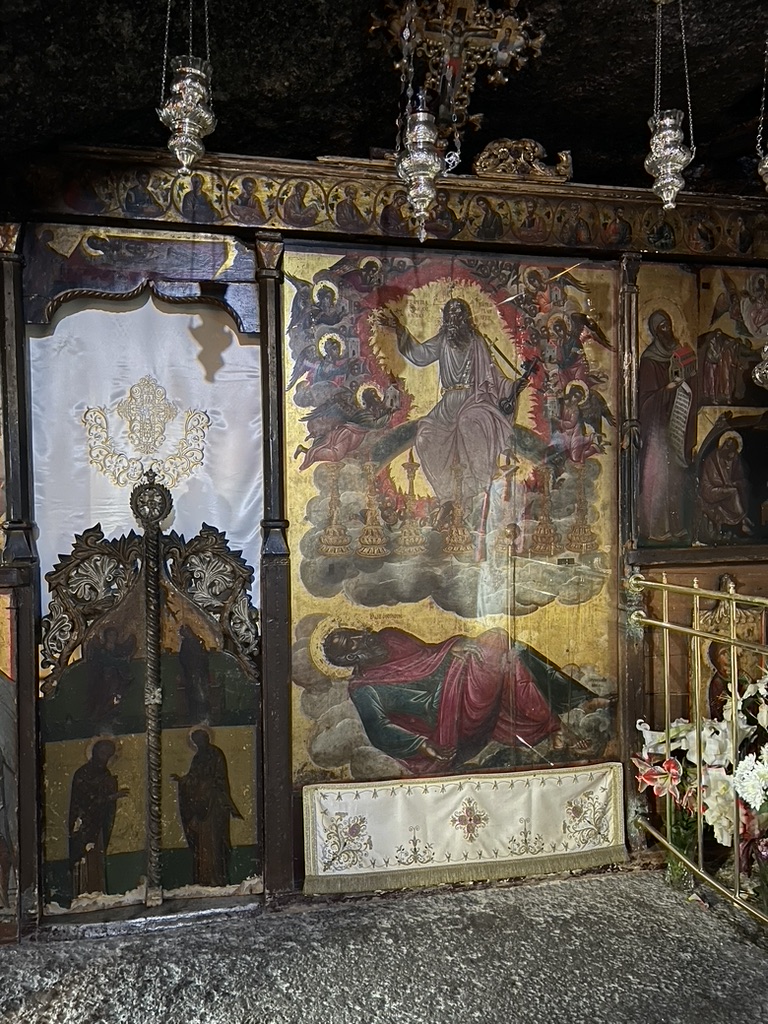
Despite its diminutive size, there is a lot to see both in terms of historical/religious interest and scenery. We had an expert local guide in Antonis Dimas, who spent many years as a travel photographer and writer. Antonis has written his own guidebook, My Own Unknown Patmos. He took us to the cave where John is reputed to have been based during his time on the island, and the monastery founded by Christodoulos in the late eleventh century to keep John’s vision and memory alive on the island, as well as many lovely sites that only a local would know.

In this devoutly Orthodox part of the world, there are many icons on display that remind worshippers of the saints of the past and the crucial elements of the Christian faith. They are an integral part of devotion in the eastern Mediterranean. While these can be widely appreciated, what I connected with most was the sense of isolation that John probably experienced, and how, on a clear day, he could look across the sea towards Asia Minor, modern-day Turkey, to ponder on the groups of Jesus followers to whom he felt compelled to write.

While Revelation may have its roots in some kind of revelatory experience, on close inspection it is clearly a book creatively and carefully written, even if its Greek is the strangest in the whole of the New Testament. It is a mixture of apocalyptic literature, prophecy, and letter, but at its heart is the pastoral desire of ‘John the Theologian’ to help these seven churches, and all Christians, to see the challenges and battles that faced them and how to live faithfully while bearing witness to Jesus.

There was a peacefulness to Patmos that was delightful to experience, and it has already crossed our minds that this would be a good place to revisit.

Posted in Uncategorized | Tagged , , , , | Leave a comment

The One who raised the Lord Jesus…

In these weeks following Easter, with our celebration of the resurrection of Jesus, it is easy for us as Christians to rejoice in the victory of Christ over death. He has triumphed over the cosmic enemy of humanity. Yet, as each day witnesses, that enemy still battles on and will do until its final destruction. In recent days, even tonight, I have heard of those who have passed through the gateway of death. Some have been older, some fighting illness for a long or short time. Others are younger, taken suddenly or by illnesses that are not meant to afflict their age group.

In whatever guise death comes, even when it comes seemingly as a friend and as a release from suffering, ultimately it is the enemy of humanity and the destroyer of life. Paul views death as one of the cosmic powers that is anti-God, as the Last Enemy to be destroyed – and it will be, but not yet. In such circumstances we must never resort to platitudes in an effort to alleviate the pain of those who are left behind. And yet it is incumbent upon us to speak words of hope, not based on some folk religion’s view of ‘heaven,’ but from the faith we have that God raised Jesus from the dead.

Paul writes in 2 Corinthians 4, “13 It is written: ‘I believed; therefore I have spoken.’Since we have that same spirit offaith, we also believe and therefore speak, 14 because we know that the one who raised the Lord Jesus from the dead will also raise us with Jesus and present us with you to himself.” This is not a statement in the abstract, but one that emerges out of his incredible suffering for the sake of the name of Jesus. It is one that was spoken to people who had trouble both believing that suffering was a real part of the Christian life, and that resurrection was possible. It is possible because Jesus was raised, and with Jesus, God will also raise us.

In the meantime, as we struggle to live with their absence, Paul tells us in 2 Corinthians 5, that their ‘tent-home,’ with its frailty and mortality, has been replaced by a ‘dwelling from God, a house not made with hands.’ It is a home for which he longs because it means being with Christ – ‘at home with the Lord.’

It is one of the ironies of faith that our hope of resurrection can only be strengthened in the face of death. I remember that, while I firmly believed in resurrection because of the resurrection of Jesus, it was only on the death of my father nearly twenty years ago that it took hold of me in a way that it hadn’t beforehand.

To my friends who are grieving I say this, the pain is real for us, and do not try to ignore or suppress it. Death is a thief who takes those whom we love the most. But in the midst of our grief let us keep on saying to ourselves, ‘The one who raised the Lord Jesus from the dead will also raise us with Jesus.’

Posted in Uncategorized | Tagged , , , , | Leave a comment

I will be there for you

We are not very good in Church life at acknowledging lament, even if that lament needs to be couched in hope. But it is an important element of life for us since all of us go through hard times, some of which are very difficult to comprehend. There are several folks we know who, in recent times, have had difficult and life-changing experiences that are lamentable in the strict sense of the word.

As some of you will know, I’ve been discovering a bit more about my favourite Dutch contemporary worship group, Sela ( www.Sela.nl ) and I noticed that the songs I like best, which appear to be very popular in the Netherlands as well if YouTube is anything to go by, have this mixture of lament and hope. I wondered why that was, and in digging a bit deeper I think I found out. Their first main female vocalist was a lovely singer by the name of Kinga Bán who, for much of the time she was in the band, was fighting a losing battle with cancer. An experience of sharing together in this most sorrowful of life situations, and doing so in faith, resulted in a creativity that can speak to the whole church through their songs.

One of Kinga’s last recordings was of a song called Ik zal er zijn, “I will be there.” It is not only reflective of her own experience but draws on one of the most foundational stories in the whole of the Bible – that of Moses meeting God at the burning bush. On being told by God to go back to Egypt and lead the Israelites Moses says if the people ask who has sent me, what shall I say. What is your name? God says, ‘Say I am has sent you,’ and elaborates further by saying, ‘I am who I am,’ or ‘I will be who I will be.’

There has been much ink spilt on what this name means, with some thinking it refers to the eternity of God, which may well be part of it. But the most illuminating interpretation I’ve come across I first met in the work of John Goldingay, who thinks it is a name of assurance to the people that conveys ‘I will be to you all that you will need me to be for you’ – or, as we might say, ‘I will be there for you.’

This is not just a word to Moses or the Israelites, but for all who follow in their steps of faith – for us, even in the darkest of times, God says, ‘I will be there for you.’ It is this story that the title of the song comes from, and the song communicates that message very well.

If you want to listen to it you can catch it at this YouTube link:

Posted in Uncategorized | Tagged , , , , | Leave a comment

By their fruits you will know them

I’m a great fan of an app called ‘Streaks’ which reminds me of several things that I want to do every day, or once a week, or whenever. It reminded me today that I’m scheduled to write a blog. Also on the list, Monday to Friday, is a reminder to watch a video from the creators of the Daily Dose of Greek (another app, or you can find them at https://dailydoseofgreek.com/ ) who go through a New Testament text verse by verse helping the viewer understand what is going on with the words and the grammar. It’s a great resource, and it’s free.

Today’s text was Matthew 7:20 ἄρα γε ἀπὸ τῶν καρπῶν αὐτῶν ἐπιγνώσεσθε αὐτούς, ‘By their fruits you will know them.’ It confirmed what was going around in my head for today’s blog because this week saw the start of the first criminal trial ever of a former President of the United States. To mention the name Donald Trump is a ‘light the blue touch paper and stand well back’ moment, because no-one in my lifetime had generated so much strong feeling for and against. ‘Marmite character’ does not cover it.

There are things about DJT that are not in doubt and are a matter of public record. He has been married three times and cheated on all his wives; his dominant view of women is that they are sex objects – witness the infamous ‘Access Hollywood’ tape; he and his company have been found guilty by a jury in a criminal case for defrauding the government, with another civil judgment in process; there are four criminal indictments working their way through the court system, the first of which has just started in New York; he cheats at golf. There is much more that could be written, but this mustn’t turn into a rant.

Given the warning of Jesus, ‘by their fruits you will know them,’ what is most surprising about the MAGA base is that so many of their number would call themselves ‘Evangelical Christians.’ I think that the word ‘Evangelical’ is more theologically understood in the UK and more sociologically understood in the US. But at its heart, it is about being ‘gospel/good news people’ – sharing the good news of Jesus with those willing to listen.

To zoom out a bit and think about this disturbing situation in relation to those in the wider world who may be open to listening to the good news of Jesus, does the endorsement of Trump, with his obvious ‘fruits,’ help or hinder that mission of the Church? There is no doubt in my mind that it hinders the spread of the good news, because even those who would not consider themselves open to it are saying to Trump-supporting Christians, ‘How can you support this man when he is so antithetical to the teaching of your founder?’ It is a very good question, because ‘by their fruits you will know them’!

Meanwhile, we all wait for the November election to see how it pans out. Ah, ‘Streaks’ has just reminded me about today’s blog – I can mark it completed.

Posted in Uncategorized | Tagged , , , , | Leave a comment

What do you think?

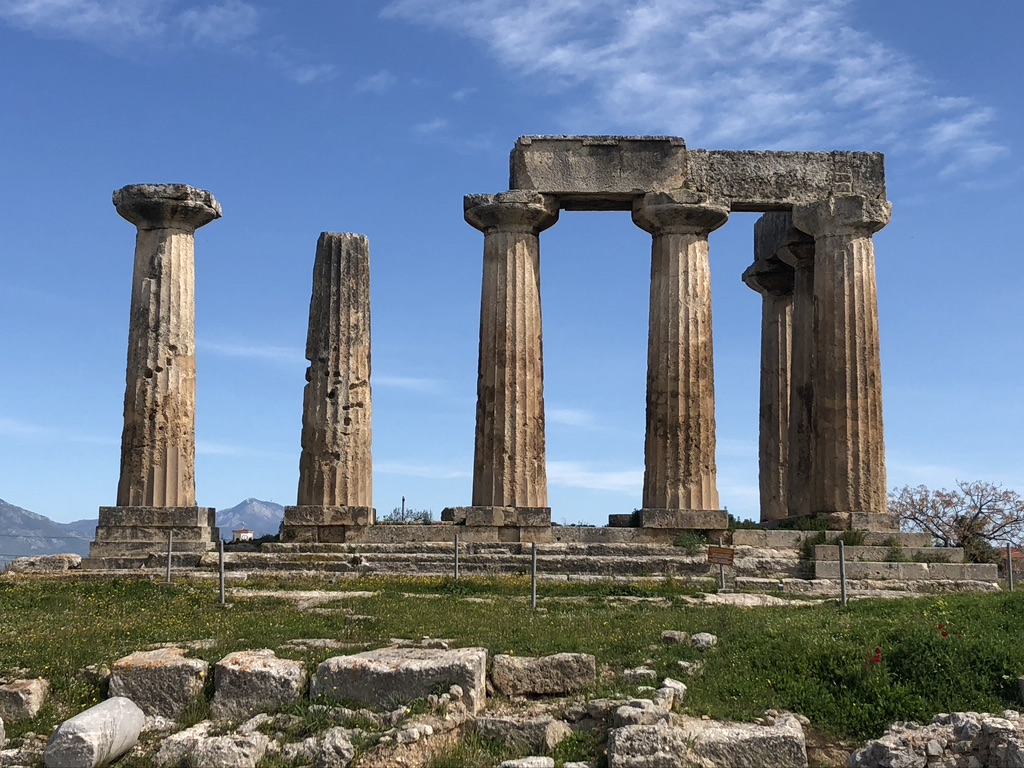
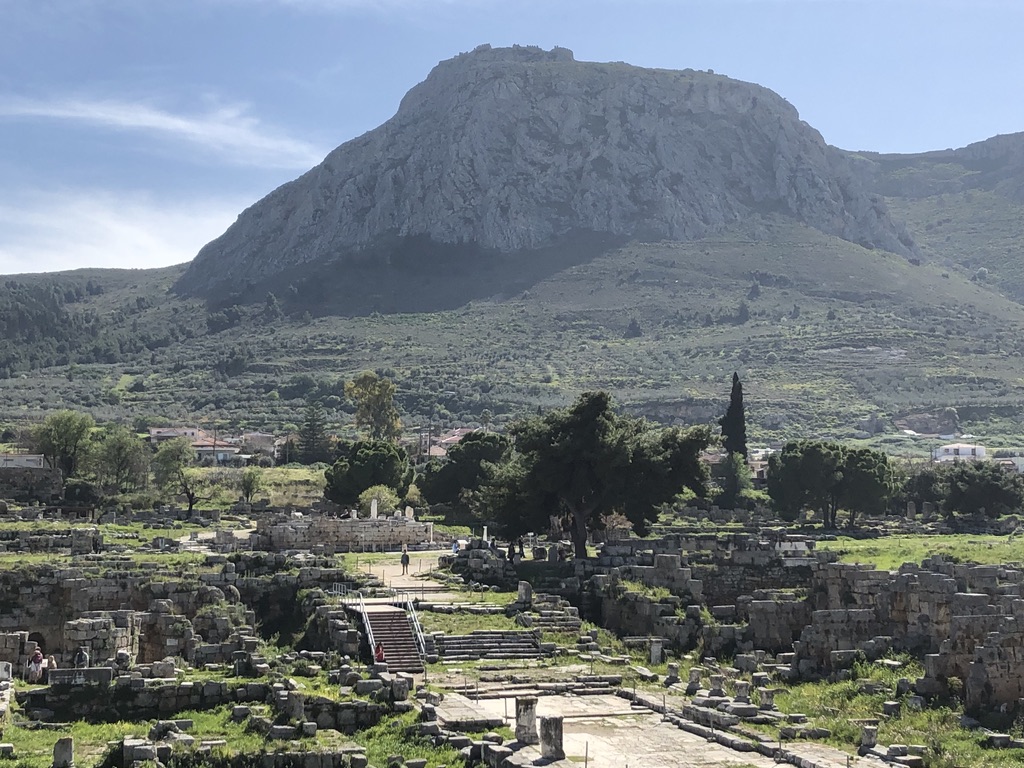
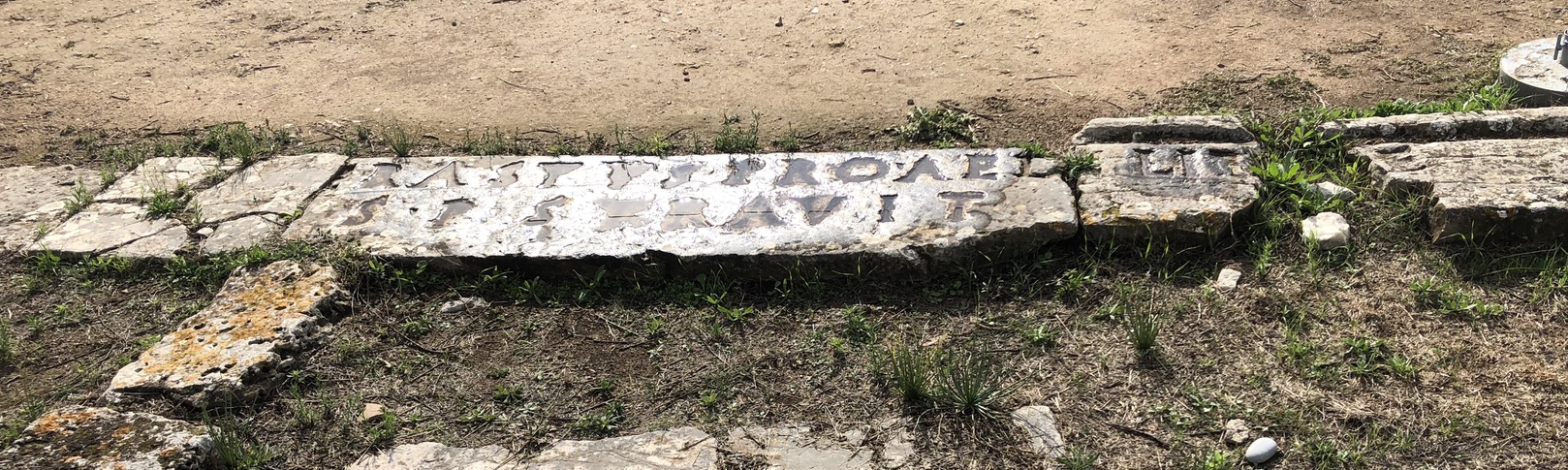
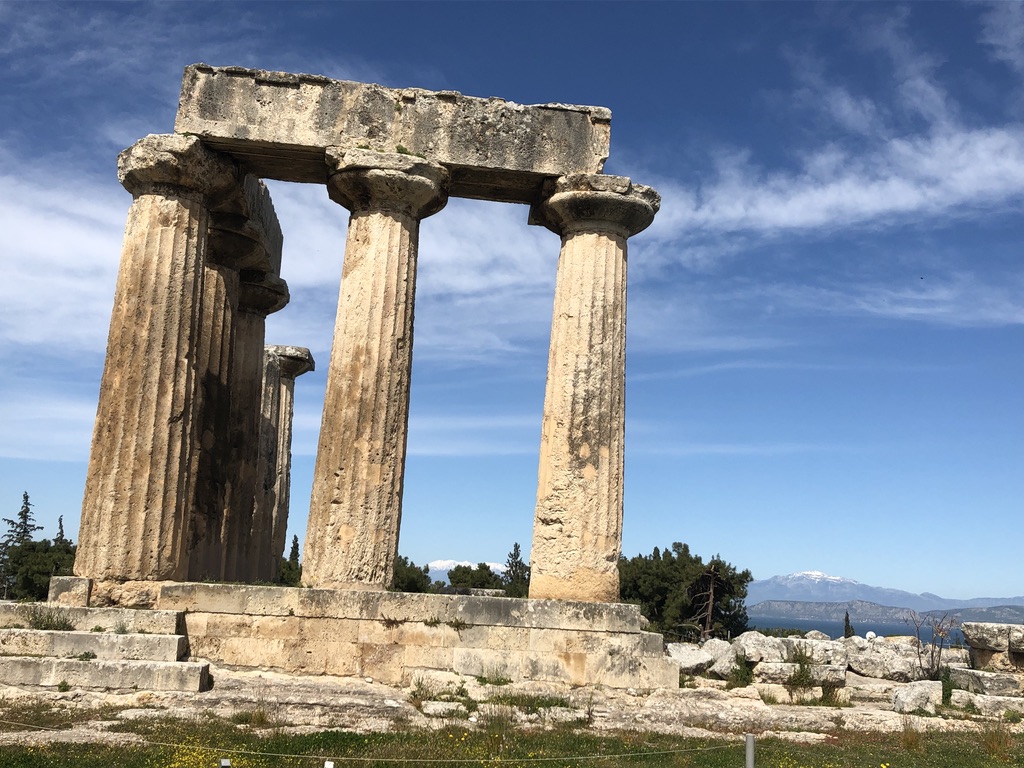
One of the most exciting moments of my retirement, and of my time as a student of the New Testament, was when Jane and I had the opportunity to visit Ancient Corinth in 2019. This blog contains three of the many photos I took, my favourite being the one facing the Acrocorinth (Corinth’s equivalent of the Acropolis in Athens). The site is run by the American School of Classical Studies at Athens, and they have organised digs there annually (more or less) since 1896. Much of the material discovered and described can be found in a series of volumes called Corinth, some of which are now in the public domain and available on ASCSA’s website at: https://corinth.ascsa.net/research?v=default#Publications .

What they have discovered has been discussed widely in the world of archaeology and biblical studies, and the material remains uncovered shed much light on the social setting and conditions of what was a vibrant commercial city served by two ports, one on either side of the isthmus. The Apostle Paul spent a lot of time there and wrote several letters to the infant church in Corinth, the relationship being a bit like that between an irritated parent and a wayward child.

Little did I know then that I would spend a considerable amount of time with parts of these letters, especially Paul’s great chapter on resurrection, 1 Corinthians 15, and a much more controverted section, 2 Corinthians 4:7-5:10. This latter passage is particularly significant in my present studies, and I would be grateful for your help by sharing your impressions with me.

The focus is 2 Corinthians 5:1-5, where Paul speaks of believers receiving a permanent home from God to replace the tent-house that we have now. The latter speaks of frailty and mortality, while the former gives the assurance of endurance and stability. The question is, according to 2 Corinthians 5:1-5, when do believers receive this new home? Is it at the point of death, or on the day of resurrection? Or is there another solution?

One of the fascinating follow-up questions relates to us in our time: how do we picture our friends and family who have departed this life ahead of us? I’m not going to make any suggestions so that I don’t muddy the waters, but I would appreciate hearing what you think. Are they recognisable? Do they have shape and form? Are they wispy ethereal beings? Do they have any conscious existence at all?

There are many other questions that could be asked, but my main one is this: what do you think, and why do you think it? There are lots of reasons why this is important to us as human beings who grieve the loss of loved ones, but the main one is pastoral, thinking about the comfort we can take from what we believe.

Take a moment or two to drop me a comment. I’d be very grateful to hear from you to inform my own thinking. Nothing shared on the blog will be shared anywhere else. Thanks in advance and may your thinking about this bring its own comfort.

Posted in Uncategorized | Tagged , , , , | Leave a comment

Grumpy old man

Last week I had the privilege of conducting a solemn and reflective service on Good Friday evening, as well as the great joy of preaching about the resurrection of Jesus on Easter Day. With all these roller-coaster thoughts of sorrow, pain, death, and Jesus’s victory over death swirling about in my head I came across two quotations that made me put on my ‘grumpy old man’ hat! Both quotes came from a similar source on the theological spectrum. The first was the title of a song, called ‘Death is hollow,’ and the second was a quotation from Arsene Wenger (taken out of its football context for effect) that ‘Christmas is important, but Easter is decisive.’ [Note: if Arsenal don’t win the league this year it might have been Christmas that was decisive, since they dropped lots of points then. Sad for me as a Gooner.]

So, why did these two things get me worked up? My reactions were immediate, and thinking about why I realised that it was both for pastoral and theological reasons. Is it true that ‘Death is hollow’? I suppose it depends on what ‘hollow’ means, but I took it to mean that Death, that cosmic power and enemy of all that is mortal, is a lightweight and has no power to hurt us now that Jesus has been raised from the dead. Pastorally, I think that this is a disastrous position to take. Look around and see all kinds of families, Christian and not, whose lives have been shattered by the trauma of death – sudden and without warning, from suicide or murder, from a long-battled illness, from war in places like Ukraine and Gaza and Israel. Why do people, even Christians, feel the grief of the death of a loved one if death is hollow? Rather than try to persuade people that death is hollow, and leave them wondering why their body, mind and spirit is telling them something different, we need to help people grieve in faith. The grieving process has a vital role in helping human beings come to a place where life can continue despite the intrusion of death.

‘Death is hollow’ is also theologically wrongheaded. According to Paul, Death is the Enemy, and it will be the Last Enemy to be destroyed. Despite the resurrection of Jesus, until his coming death still holds power. It was Oscar Cullmann who illustrated this differentiation using the metaphor of D-Day in June 1944 and VE-Day, nearly a year later.  D-Day was a day when the successful invasion of Normandy assured that ultimate victory in Europe was certain, and Cullmann likens that to Jesus’s death and resurrection. But ultimate victory, when the Last Enemy will be destroyed, will not be realised until the coming of Christ in glory, our spiritual VE-Day.

‘Christmas is important, but Easter is decisive’ got me going for mainly theological reasons, but I think it is bad pastoral practice to set the two most celebrated festivals of the Christian calendar against each other. We need to celebrate both. Yes, Christmas has been more commercially exploited, but the remedy for that is to teach Christians how to mark it appropriately rather than pit it against Easter. More significantly, ‘Christmas is important, but Easter is decisive’ sets two events in the drama of salvation against each other, without the understanding that if either of them were missing, the Christian faith would not exist. It also underplays the magnitude of the decisive intervention of God through the incarnation of Jesus. Christmas is not just the birth of a baby. It is the coming into flesh of the Son of God, who then gave himself on the cross and was raised the third day. For our salvation to be effected, these events need to be held together and be seen as equally the decisive intervention of God on behalf of all creation.

Ok, I’ll take my ‘grumpy old man’ hat off now. I’m off to have some more chocolate egg.

Posted in Uncategorized | Tagged , , , , | Leave a comment

Holy Week – a change of perspective

In recent years I’ve been conscious of how different Holy Week feels in retirement after thirty years in the Parish. People often said to me at Christmas, ‘This will be your busy time,’ but the number and range of events in Holy Week and through Easter Day could be quite overwhelming. At lunchtime on Easter Day, it was not so much an experience of rejoicing in the victory of Christ over death, as being glad to get through all the services alive. There was little time to pause and reflect.

There are still lots of events taking place over Holy Week, but these days I go to very few, and only those that I find helpful in focussing on the central elements of the Passion and Resurrection of Jesus. It is my firm belief that we can only experience the full joy of Christ’s victory on Easter Day if we have plumbed the depths of the disciples’ despair on Good Friday.

It has been my privilege in recent years to lead the Good Friday evening service of reflection in our home congregation, and I find that makes me think afresh about the crucifixion. Over several readings we cover almost the whole of the crucifixion story and it’s amazing the different details that call attention to themselves over the years. This year, from Mark’s Passion narrative, we’ll be thinking of Pilate’s amazement at Jesus’s silence in the face of his accusers, the taunts for him to come down from the cross, and the temple curtain that is torn in two. Each detail has something to add to the meaning of the story.

Holy Saturday is the Cinderella day of the weekend. It was the Sabbath on which Jesus’s body rested in the tomb, but it is usually treated as a day when we go about our business as usual, getting everything ready for a big Easter Day celebration. There is one personal discipline I keep that day to remind me of its significance, and that is to take off the shelf a book by one of my late teachers, Alan E. Lewis, called Between Cross and Resurrection: A Theology of Holy Saturday. Alan was writing this book as he was fighting the cancer that took his life and these circumstances shaped in a creative way how he saw Holy Saturday and what it can say to us.

This coming Easter Day I have the unexpected responsibility of covering for the illness of a friend, and with the lectionary text set as Mark’s Gospel, it finishes on the note of the women being scared and not telling anyone. While there is scholarly dispute over whether Mark 16:8 could be the original ending of the book, and while early church leaders wrote two endings to smooth things out, the text as it stands has impressed upon me just how scary an event the resurrection was for the disciples. And it is scary for us too, because although we take great hope from it, especially at times of bereavement, when we get round to thinking about the implications of it for future existence and how it impinges on our behaviour in the present, that is an awesome realisation.

Wherever you mark the Easter Story, and in whatever circumstances you find yourself, I pray that you will know both the sorrow and joy it brings, and that it will speak into your own life in ways that you never imagined.

Posted in Easter | Tagged , , , , | 1 Comment

Life is a taboret

Looking back over my life, so far, and pondering on last week’s blog, I’m conscious of how important a place music and songs/hymns have had in my spiritual and emotional development. Even at this point in my life, decades after I first heard some of the old mission hall hymns, I will sit down and play them – with headphones on! Or it might be old Scottish Psalm tunes, like Invocation, set to Psalm 43. Or some contemporary compositions, and even Taizé chants. At the moment, with a left hand contorted by Dupuytren’s Contracture and unable to play my keyboard, I miss these times when I can inhabit a world of melodies and chords far from the madding crowd. It will be some time before I get back to them and will have to content myself with ear pods, MP3s and YouTube videos.

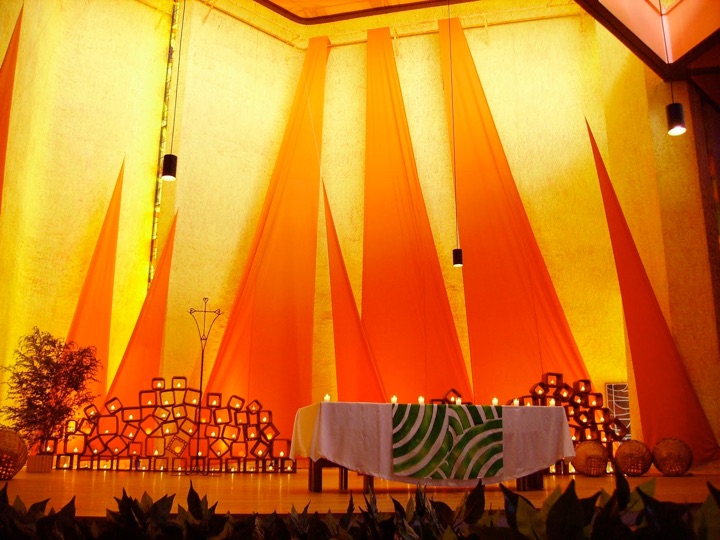
I was reminded by Facebook last week that it’s eleven years since I made the first of my two trips (so far!) to Taizé (www.taize.fr ), an ecumenical monastic community in the Burgundy region of France. The community is justly famous for its chants in many languages, and the tens of thousands of mainly young people who spend a week there engaging in worship, work, Bible Study, and fun. It has impacted and transformed countless lives from many nations. Each week there is a spiritual journey reflected in the thrice daily worship times and morning studies, that culminates at the weekend with Friday night prayer round the cross, Saturday night candles spreading light in the darkness, and celebrating the resurrection with the Sunday morning eucharist.

There is a liturgical simplicity about the community’s times of worship: song, prayer, Scripture and silence. If you want a seat, you can sit on the steps, or bring your own taboret – and if you don’t have one you can buy community-made ones in the ‘Exposition des Ateliers.’ The community lives off what it produces and the money paid by pilgrims for food and lodging – both very basic. Even the smallest donation is not accepted, so ‘keep the change’ is not part of the vocabulary.

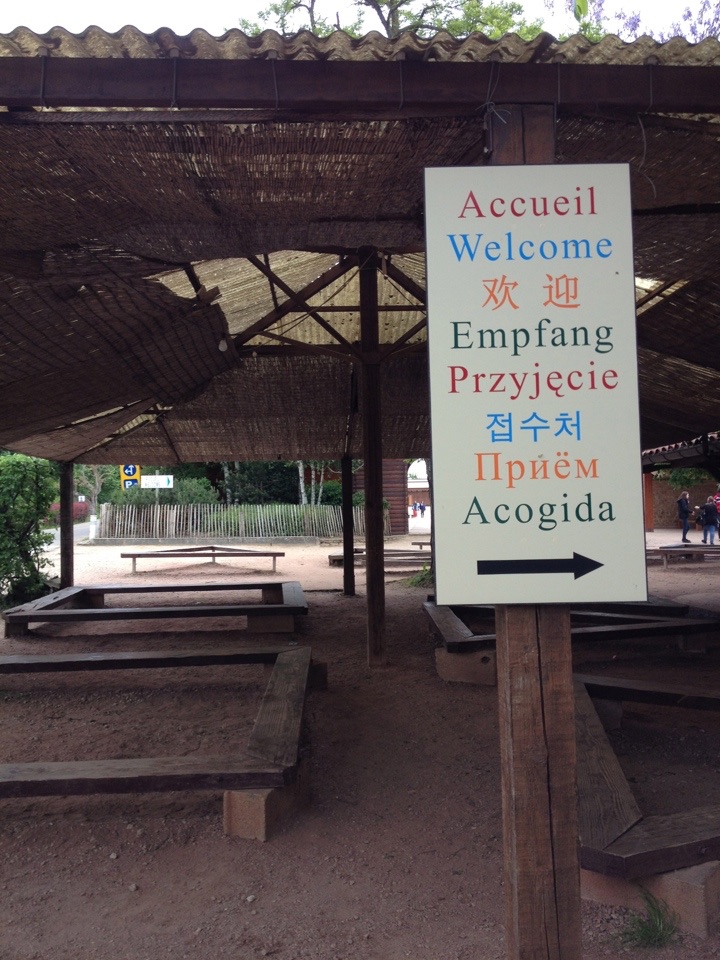
It is hard to understand why so many go and continually return to this tiny village in the French countryside, apart from the fact that people know God is encountered there in ways that are difficult to articulate. The ripple-effect of its influence is experienced all across the globe, and, through the languages in which it offers worship, it seeks to encompass as many people groups as possible within its fold.

I thought that my Taizé days might be over, but I’m glad to say that I’ve just been asked to lead a local congregational evening of Taizé prayer. Who knows where that will lead? But the full ‘Taizé experience’ is only to be found in community life in a tiny village in the heart of France. If you want to know more about Taizé you could check out A Community Called Taize: A Story of Prayer, Worship and Reconciliation by Jason Brian Santos.

Posted in Uncategorized | Tagged , , , , | Leave a comment